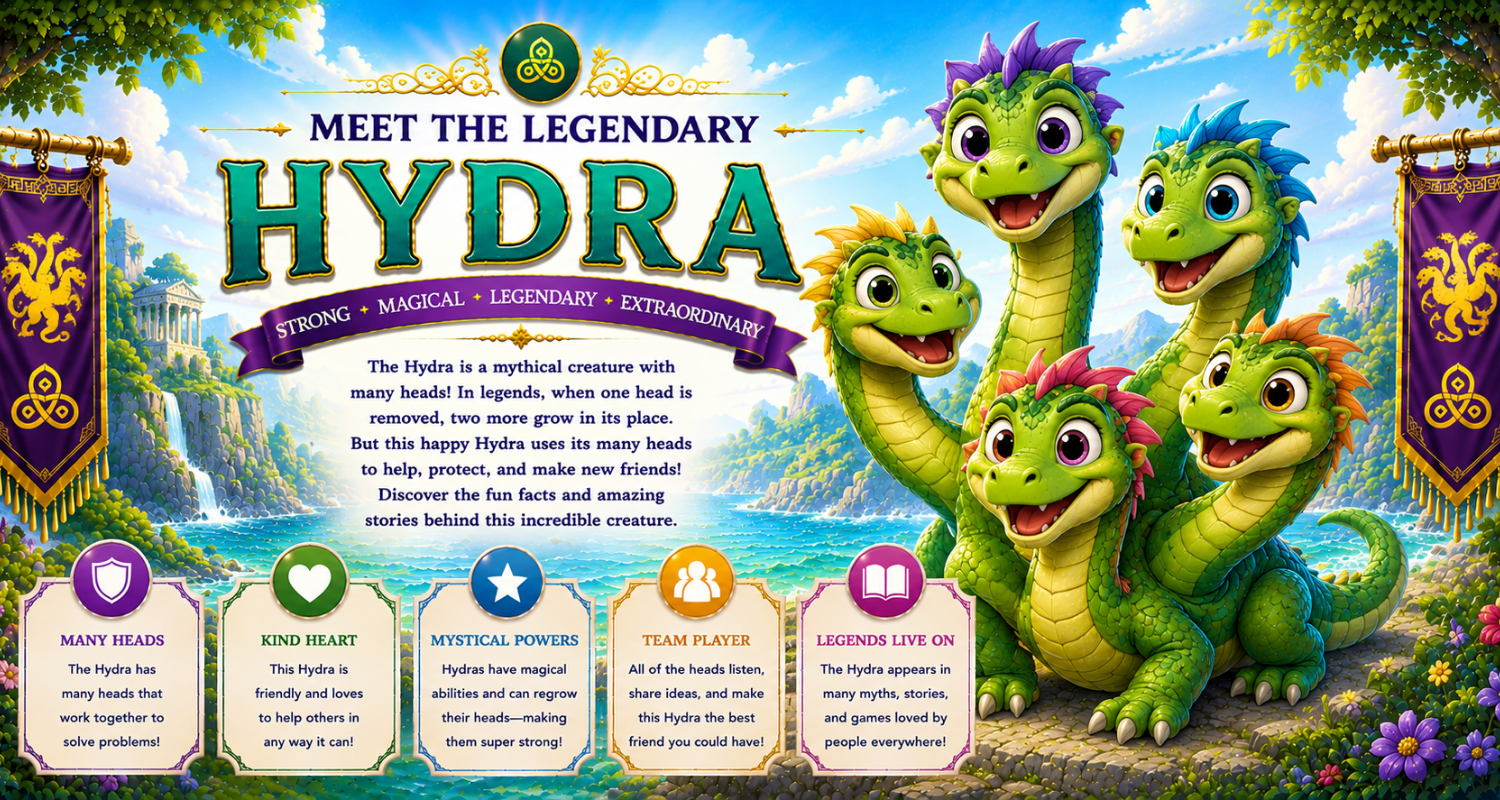
The Legend of the Hydra hero banner — eternal, relentless, undefeated

Hydra: Facts, Powers, Legends, and Mythology

Guide

What Is a Hydra?

The Hydra is one of the most terrifying monsters in Greek mythology — a legendary serpent-like creature famous for its multiple snake-like heads and its incredible ability to regrow them. It became one of the greatest challenges ever faced by the hero Heracles (also known as Hercules).

Unlike dragons that guard treasure or griffins that protect kingdoms, the Hydra spread fear throughout the swamps of Ancient Greece. Every head cut off grew back — often with two new heads in its place.

The name Hydra comes from the ancient Greek word hydor, meaning water, reflecting the creature's connection to the marshes, lakes, and swamps where it was believed to live. For more legendary beasts, explore our full mythical creatures guide.
Quick Hydra Facts

Creature Type

Mythical Serpent Monster

Appearance

Multi-Headed Snake or Dragon

Origin

Ancient Greek Mythology

Habitat

Swamps, Lakes, Marshes

Powers

Regeneration, Poison, Strength

Symbolism

Chaos, Resilience, Danger

Appearance

What Does a Hydra Look Like?

Although artists have imagined the Hydra in many ways, most legends describe an enormous serpent with multiple heads and a powerful reptilian body.

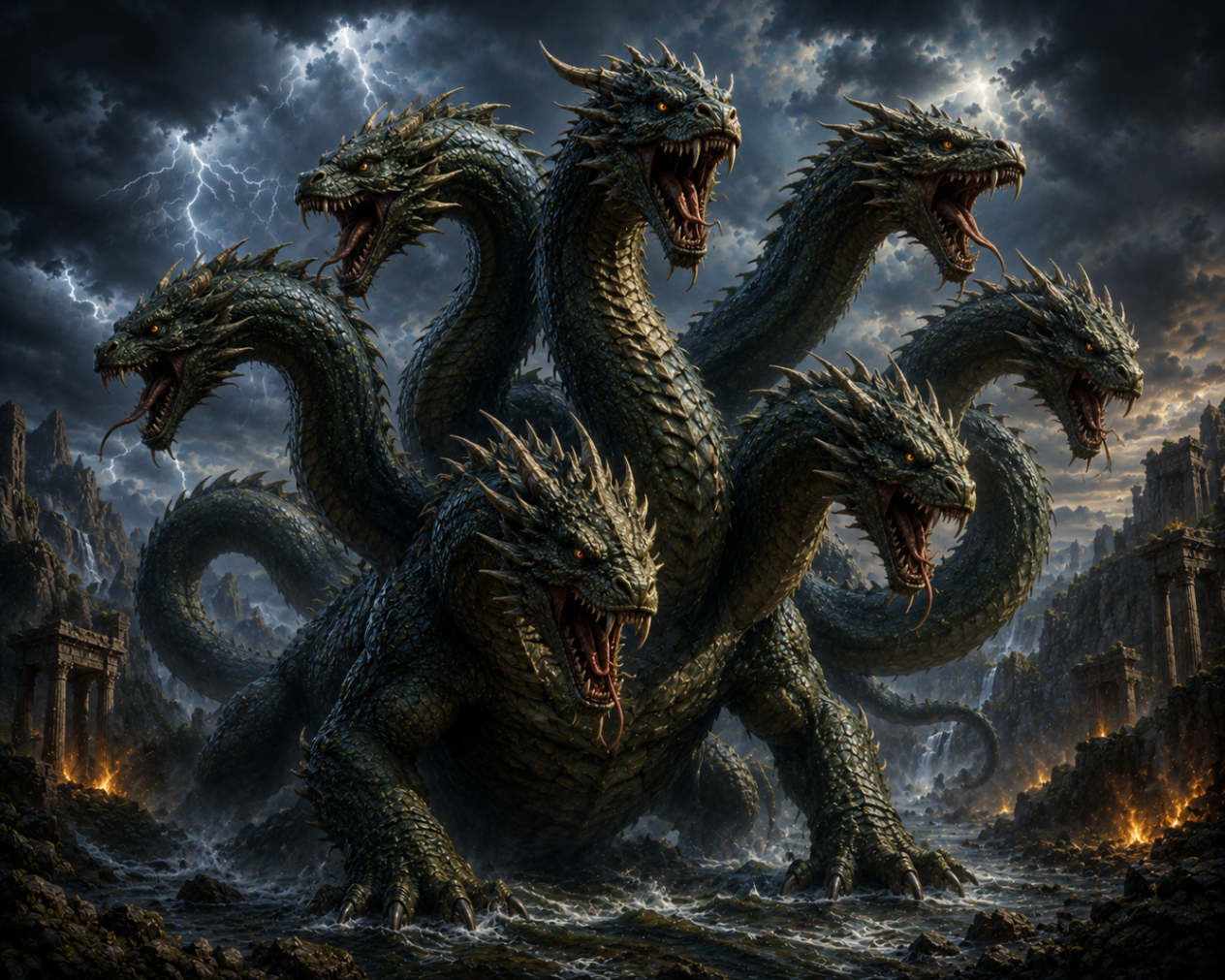
Multi-headed green Hydra rising from a swamp with fangs bared
The classic Hydra — a many-headed serpent with thick green scales and venomous fangs.

Multiple Heads

The Hydra's most famous feature. Different myths describe 7, 9, or even dozens of heads — and two new heads grow back whenever one is cut off.

Serpent Body

A long, muscular snake-like body that lets the Hydra move easily through marshes and strike prey with incredible speed.

Powerful Tail

A long, whipping tail that helps the Hydra balance. Some stories say it is strong enough to knock down trees or crush enemies.

Poisonous Teeth

Each head is filled with sharp, venomous fangs. According to mythology, even a single bite could be deadly.

Tough Scales

Thick reptilian scales protect the Hydra from attacks. Many stories say ordinary weapons cannot easily pierce its armor.

Massive Size

Hydras range from large enough to block entire roads to towering serpents that loom high above the trees.

Green Hydra

The most recognizable color, reflecting the Hydra's swamp habitat and reptilian appearance.

Black Hydra

Symbolizes darkness, evil, and dread — a popular choice in fantasy novels and video games.

Red Hydra

Associated with fiery rage, aggression, and powerful magical abilities — uncommon in Greek myth but popular in fantasy art.

Blue Hydra

Appears mainly in modern fantasy, often representing magical, icy, or water-based powers.

Powers

Hydra Powers

The Hydra was one of mythology's deadliest monsters — a creature whose terrifying powers made it almost impossible to defeat.

Regeneration

The Hydra's signature power — cut off one head and two grow back in its place, making it nearly impossible to defeat.

Poisonous Breath

Some legends say the Hydra exhaled deadly fumes so toxic they could kill creatures that came too close.

Venomous Blood

Heracles dipped his arrows into Hydra blood, making them legendary poisoned weapons. Even a small wound could prove fatal.

Incredible Strength

A massive serpent body and powerful necks let the Hydra overpower animals and crush enemies who challenged it.

Powerful Bite

Every head carried rows of sharp, poisonous teeth — turning the monster into many deadly weapons at once.

Endurance

Tough scales and relentless regeneration gave the Hydra incredible stamina in battle, outlasting nearly every foe.

Greek Mythology

The Lernaean Hydra & Heracles

The Hydra first appeared in the myths of Ancient Greece. It lived near the swamp of Lerna, a mysterious place believed to be connected to the entrance of the Underworld, where it terrorized nearby villages and travelers.

Its fearsome reputation led King Eurystheus to assign Heracles the task of destroying the monster as the Second of his Twelve Labors. When Heracles confronted the Hydra, he quickly discovered that cutting off its heads only caused two more to grow back — no matter how many he removed, the monster only became more dangerous.

Defeating the Hydra

Heracles finally succeeded with the help of his nephew Iolaus. Each time Heracles cut off one of the Hydra's heads, Iolaus used a burning torch to seal the wound before two new heads could grow.

The Hydra had one immortal head, which Heracles cut off and buried beneath a giant rock so it could never threaten anyone again. After the battle, Heracles dipped his arrows in the Hydra's venomous blood — turning them into legendary poisoned weapons.

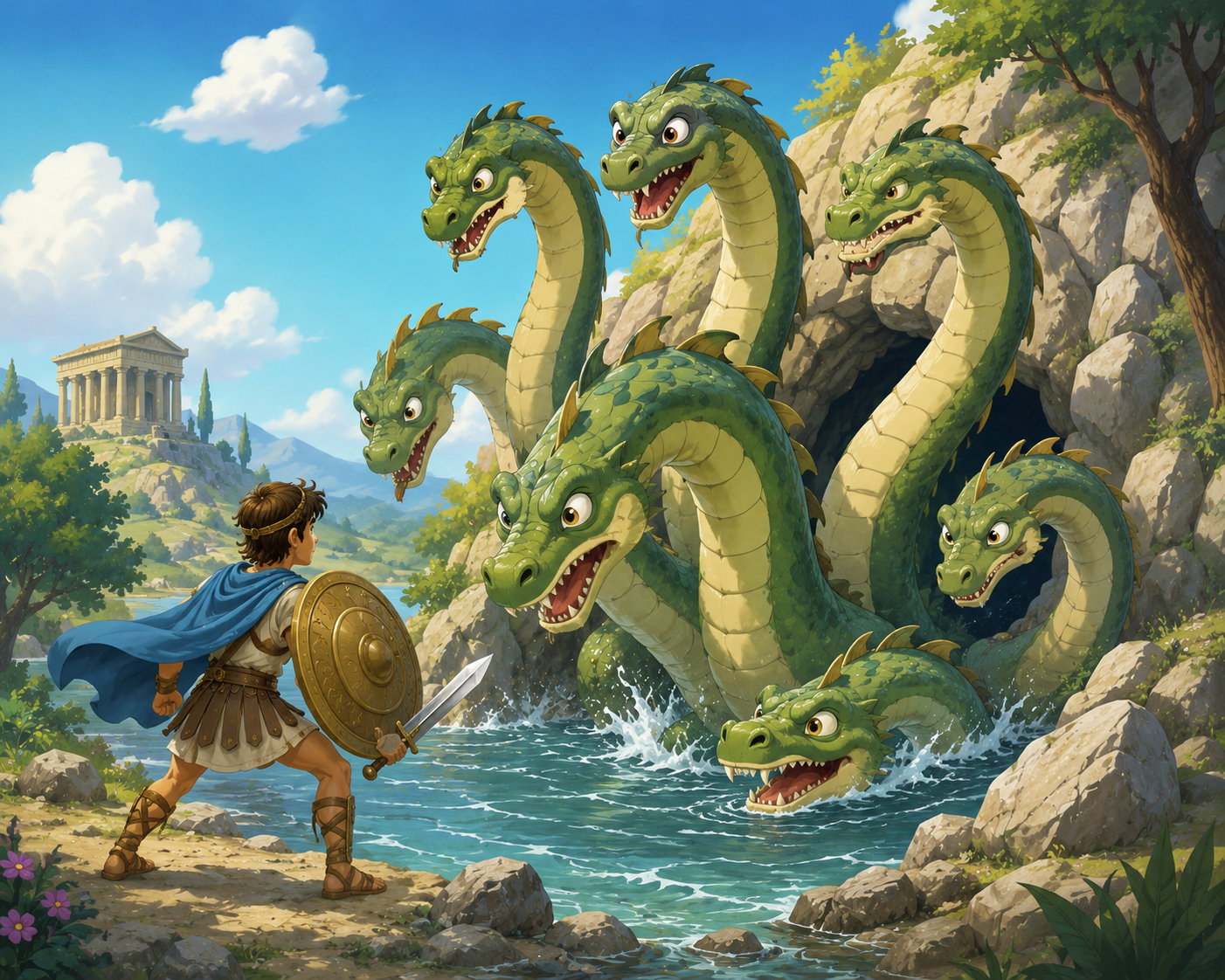
Young Heracles with shield and sword facing the multi-headed Lernaean Hydra by a river
Heracles Meets the Hydra — a kid-friendly view of the Second Labor at the swamp of Lerna.
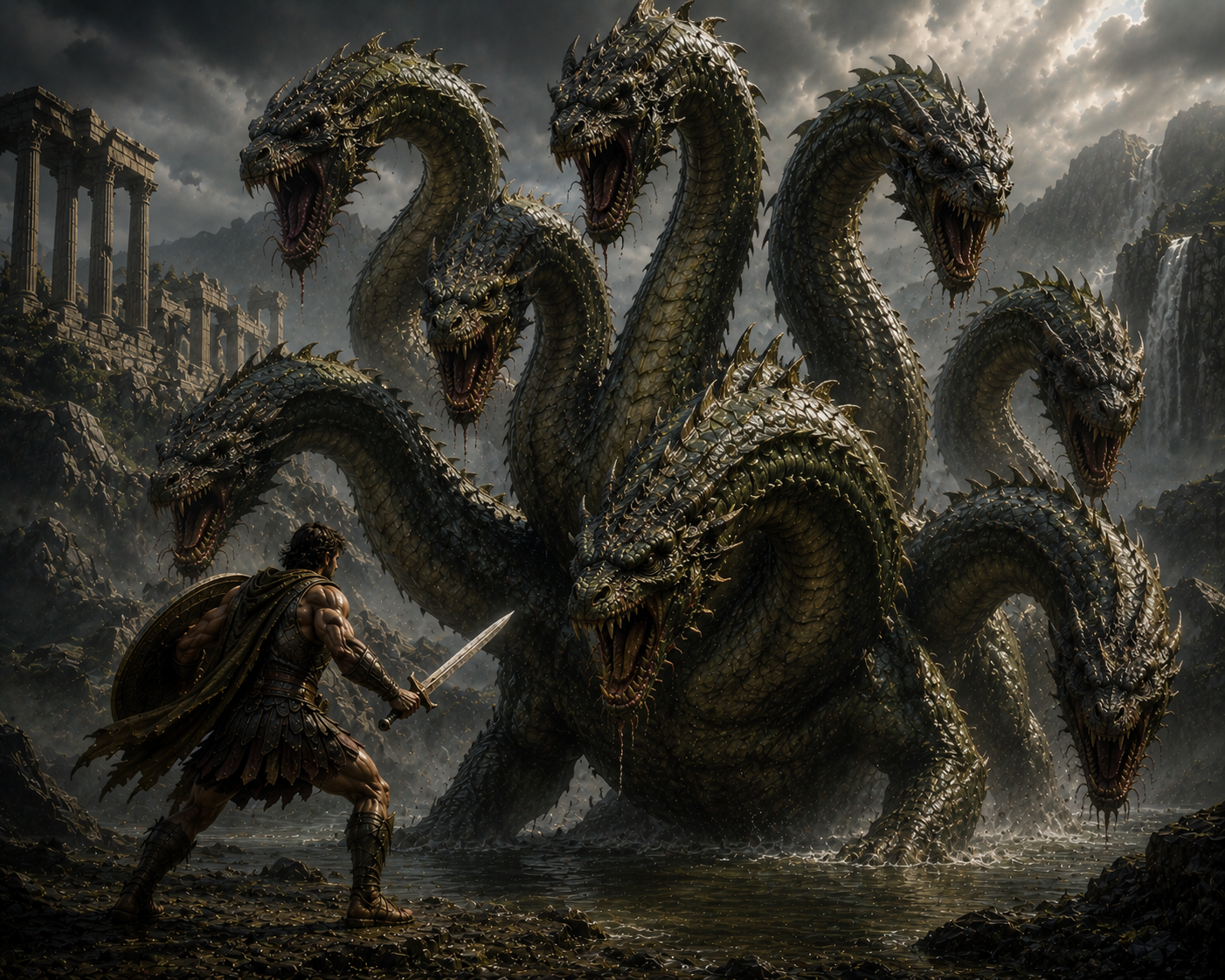
Epic illustration of Heracles battling the towering nine-headed Hydra among ancient ruins
The Battle at Lerna — the Hydra towers over the hero with all of its terrifying heads.

Home & Symbolism

Where the Hydra Lives & What It Means

Habitats

Swamps of Lerna

The Hydra's legendary home — muddy waters, thick vegetation, and dangerous terrain that hid the deadly monster.

Marshes

Wetlands of tall reeds and shallow pools where the Hydra moved silently, waiting for prey to wander too close.

Lakes

The Hydra was closely connected to Lake Lerna, which the ancient Greeks believed was linked to the Underworld.

Hidden Caves

Some myths place the Hydra's lair inside dark caves near the water, where it guarded the entrance to the underworld.

Symbolism

Resilience

The Hydra's ability to regrow its heads makes it one of mythology's greatest symbols of endurance and recovery from setbacks.

Chaos

With its many heads and unstoppable nature, the Hydra represents wild chaos and destruction loose in the world.

Danger & Fear

The Hydra warns of hidden dangers lurking in dark, mysterious places — a reminder to be brave but careful.

Problems That Grow

Its most famous lesson: ignored or mishandled problems can multiply — every head cut off only made the monster stronger.

Legendary

Famous Hydras

From ancient Greek myth to modern movies, comics, and video games — the Hydra has inspired countless multi-headed monsters.

The Lernaean Hydra

The original Hydra of Greek mythology, defeated by Heracles and Iolaus during the legendary Second Labor of Hercules.

Hydra in Hercules

The multi-headed monster appears in countless retellings of the Hercules myth across books, TV shows, and animated films.

D&D Hydra

In Dungeons & Dragons, hydras are fearsome monsters that grow extra heads during combat — among the game's most dangerous creatures.

God of War

Several God of War games feature massive multi-headed serpents inspired by the Lernaean Hydra of Greek myth.

Age of Mythology

The Hydra is a powerful Greek myth unit in this classic strategy game, gaining new heads as it slays enemies.

Marvel's HYDRA

The villainous organization from Marvel Comics borrows its name and motto — 'cut off one head, two more take its place' — from the legend.

Printables

Hydra Coloring Pages

Print a free Hydra coloring page and bring this legendary multi-headed serpent to life with your own colors.

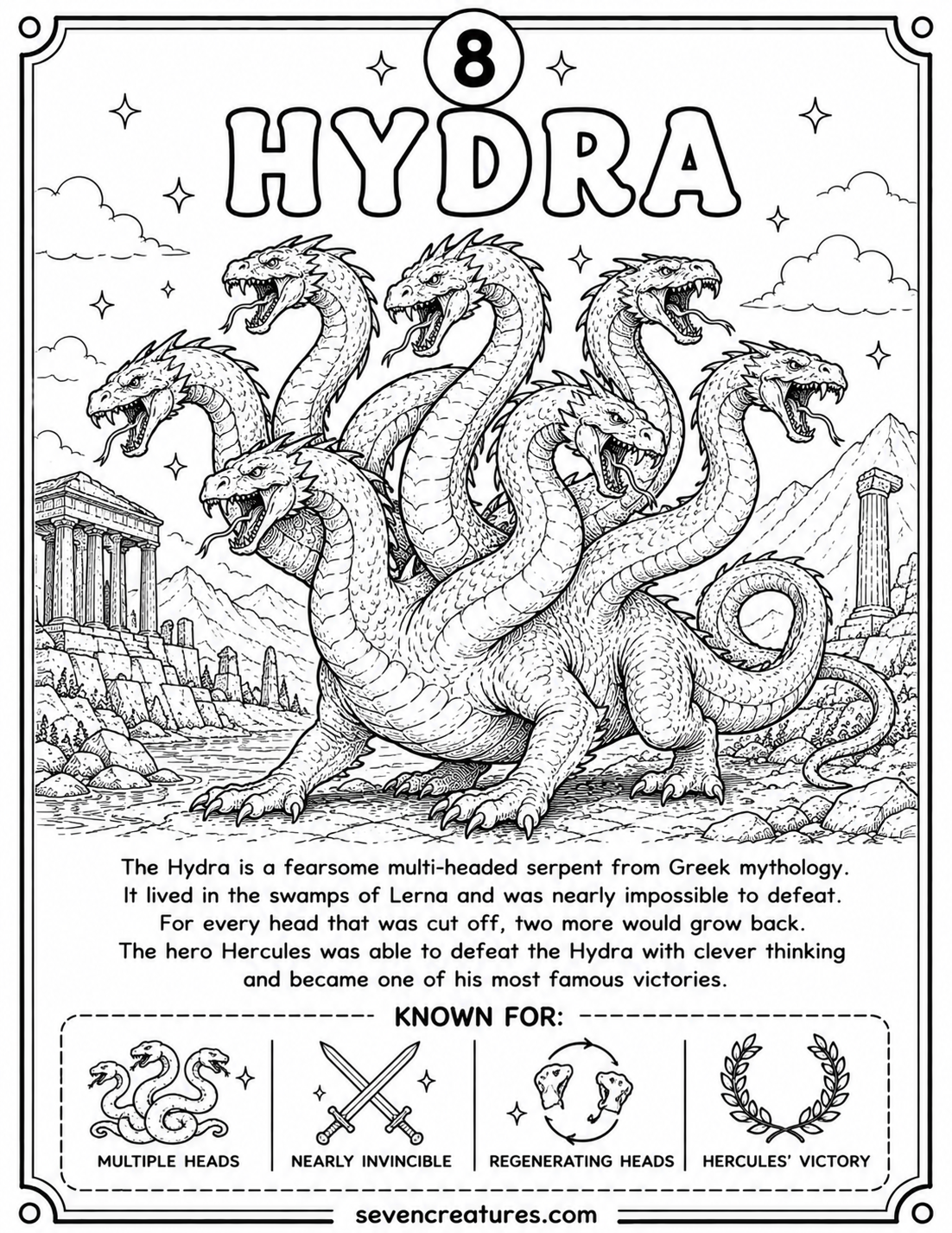
Printable Hydra coloring page with multiple serpent heads

The Lernaean Hydra

Free printable coloring page

Open Full Size
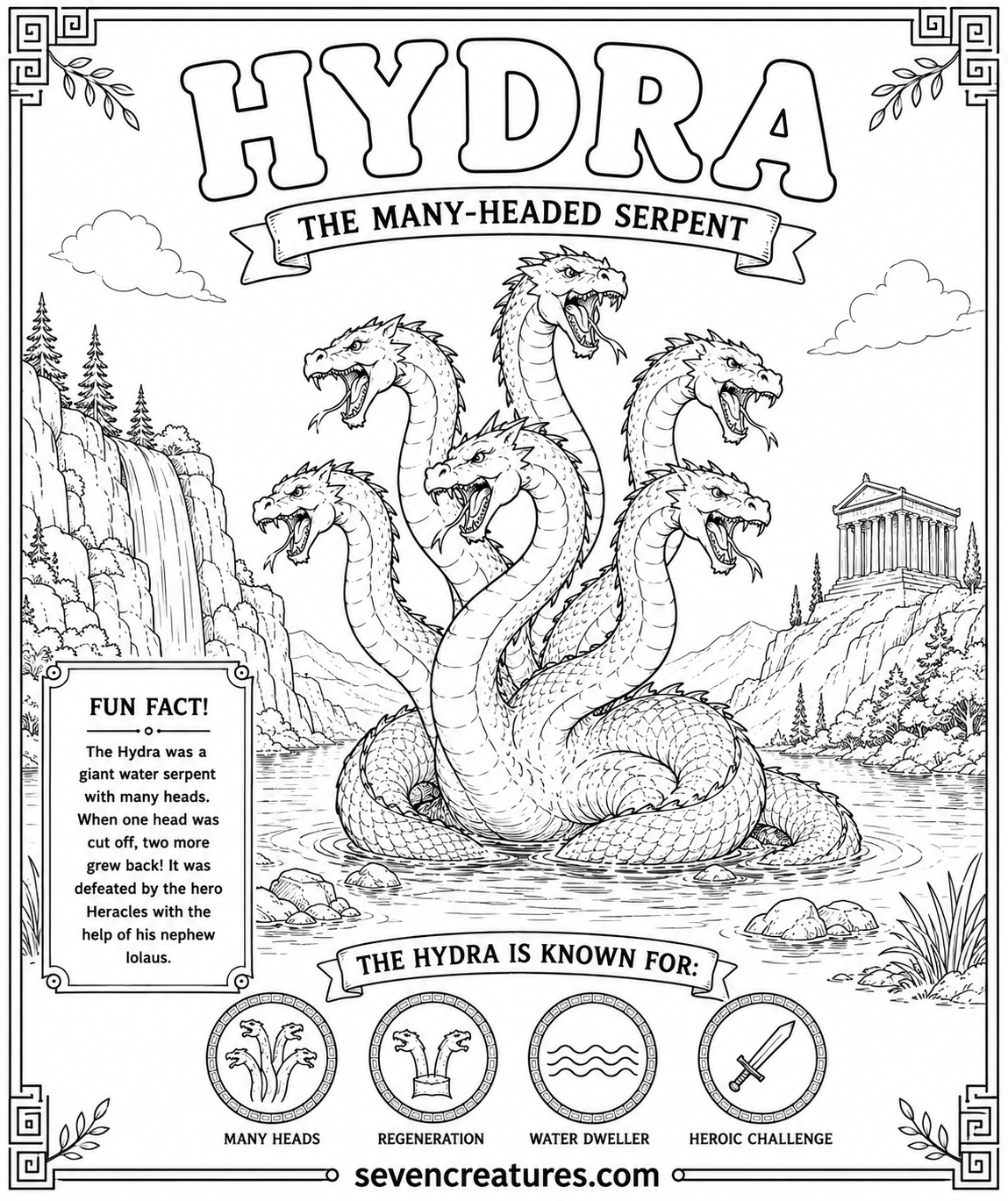
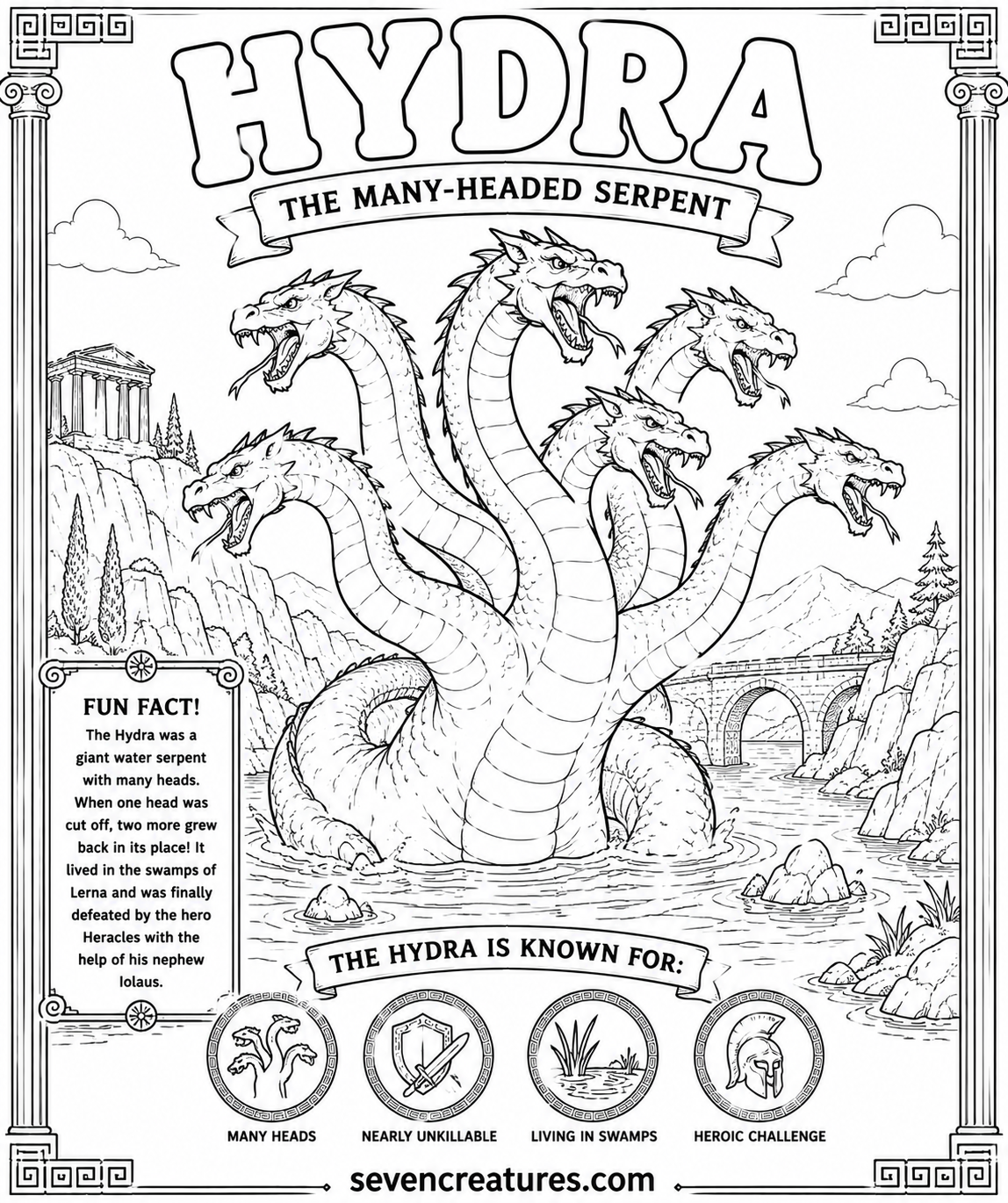
Printable Hydra coloring page with seven heads beside a waterfall and Greek temple

Hydra at the Waterfall

Free printable coloring page

Open Full Size
Printable Hydra coloring page with six heads near ancient Greek ruins

Hydra Among the Ruins

Free printable coloring page

Open Full Size
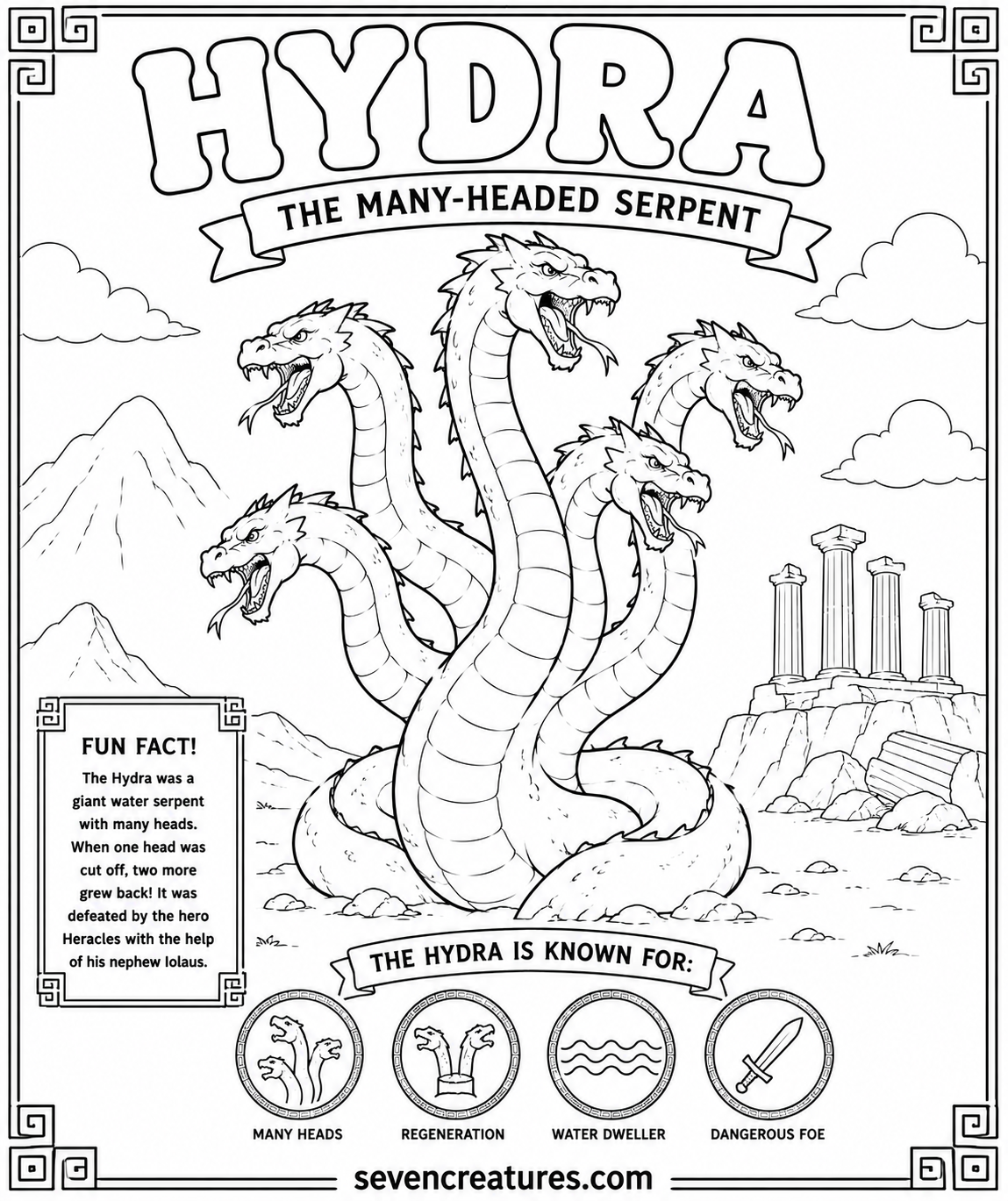
Printable Hydra coloring page with five heads in a mountain landscape

Hydra in the Mountains

Free printable coloring page

Open Full Size
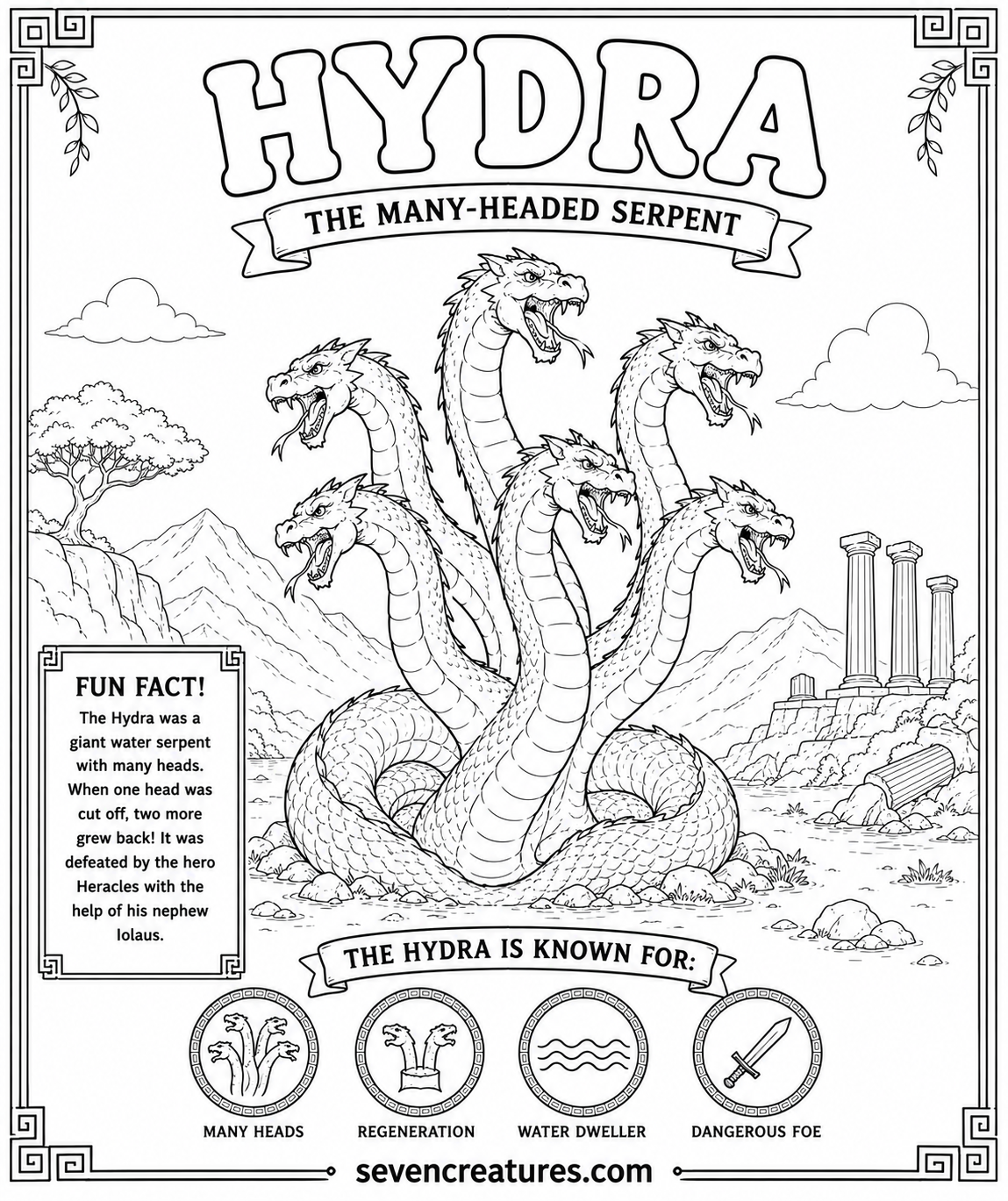
Printable Hydra coloring page framed by Greek columns

Hydra of the Greek Columns

Free printable coloring page

Open Full Size

For Kids

Fun Hydra Facts

  • 1The Hydra is a famous Greek monster.
  • 2It has many snake-like heads.
  • 3Two heads grow back for every one cut off.
  • 4It lived in the swamps of Lerna.
  • 5The name 'Hydra' comes from the Greek word for water.
  • 6The Hydra has venomous blood.
  • 7Its breath was said to be poisonous.
  • 8It was Heracles' Second Labor to defeat it.
  • 9Heracles got help from his nephew Iolaus.
  • 10Iolaus used a torch to burn the necks shut.
  • 11Some myths say the Hydra had seven heads.
  • 12Others describe nine heads, or even more.
  • 13The Hydra had one immortal head.
  • 14Heracles buried it under a giant rock.
  • 15Heracles dipped his arrows in Hydra blood.
  • 16Those poisoned arrows became legendary weapons.
  • 17The Hydra is one of mythology's deadliest monsters.
  • 18It is often shown as green or dark in color.
  • 19The Hydra inspired many fantasy monsters.
  • 20It appears in books and movies today.
  • 21The Hydra is popular in video games.
  • 22It symbolizes resilience and persistence.
  • 23Marvel's HYDRA takes its name from the myth.
  • 24The Hydra remains one of mythology's greatest monsters.
  • 25Its legend is more than 2,000 years old.

FAQ

Frequently Asked Questions

SevenCreatures logo

Reviewed by Sevyn's Creature Team

SevenCreatures creates fun, kid-friendly educational content about animals, dinosaurs, sea creatures, and mythical creatures. Our mission is to help kids explore the amazing creatures of our world through facts, quizzes, coloring pages, and stories.