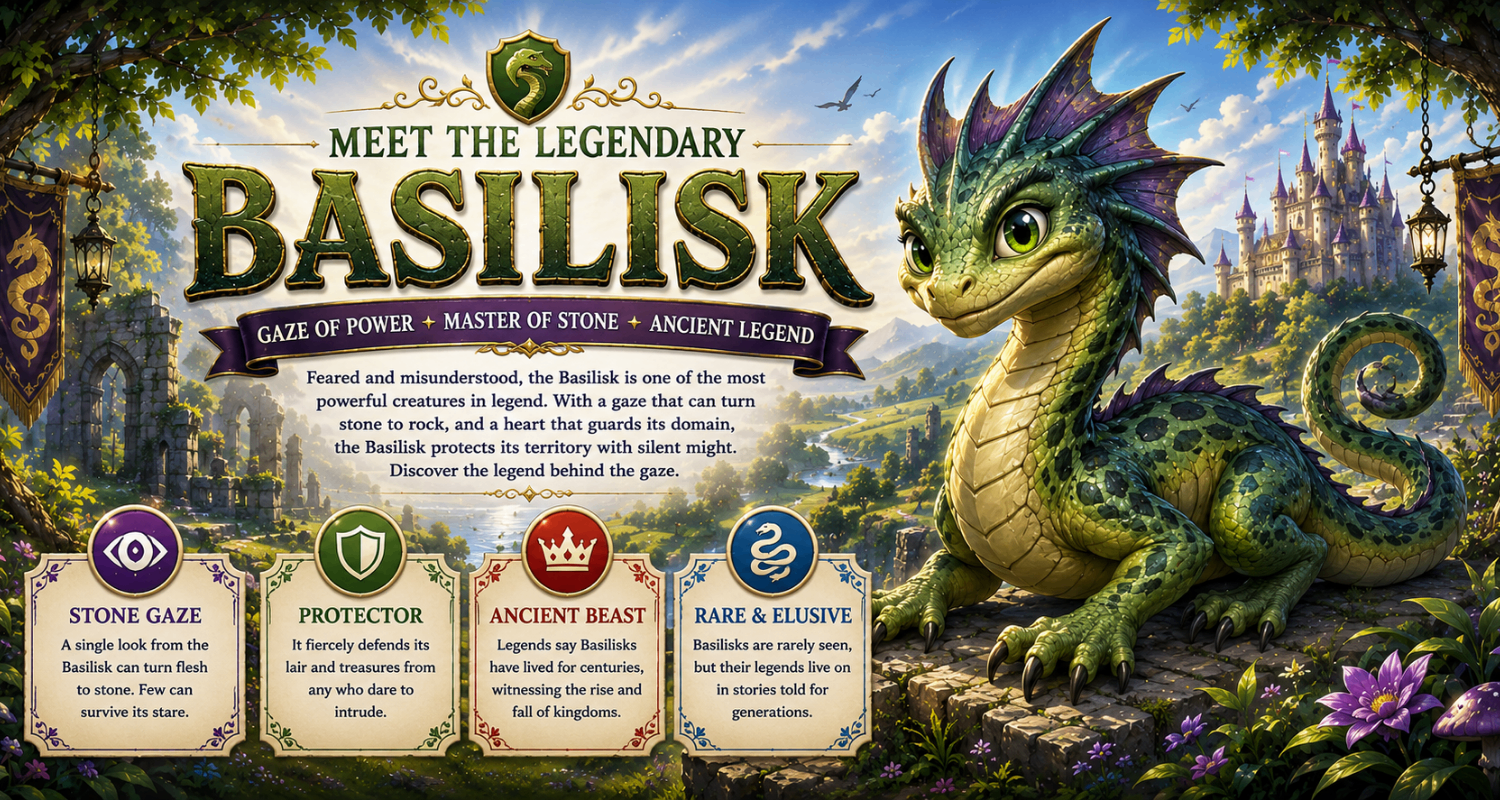
Meet the Legendary Basilisk — Gaze of Power, Master of Stone, Ancient Legend hero banner

Basilisk: Facts, Powers, Legends, and Mythology

Guide

What Is a Basilisk?

A Basilisk is a legendary serpent monster famous for its deadly gaze and powerful venom. According to mythology, it was one of the most dangerous creatures in existence — simply meeting its eyes could bring death or, in later legends, turn victims to stone.

The Basilisk first appeared in Ancient Greek writings before becoming a popular creature in medieval European folklore. Over time, storytellers described it as a gigantic snake, a serpent with a rooster-like crest, or even a dragon-like monster with magical abilities. Its terrifying reputation earned it the title "King of Serpents."

The name Basilisk comes from the ancient Greek word basiliskos, meaning "little king." The name reflects the creature's legendary status as ruler of all serpents — a royal connection that helped make the Basilisk one of the most respected and feared creatures in medieval bestiaries.

The Basilisk stands alongside the dragon, the hydra, and the cerberus as some of mythology's most fearsome monsters. Explore the full mythical creatures guide to meet more legendary beings.
Quick Basilisk Facts

Creature Type

Mythical Serpent Monster

Appearance

Giant Snake or Serpent

Origin

Ancient Greek & European Folklore

Habitat

Caves, Ruins, Forests

Powers

Deadly Gaze, Venom, Super Strength

Symbolism

Danger, Fear, Power

Appearance

What Does a Basilisk Look Like?

The Basilisk's appearance has changed over the centuries, but it is most commonly portrayed as an enormous serpent with frightening eyes, venomous fangs, and thick protective scales.

Serpent Body

A long, muscular snake-like body lets the Basilisk move silently through caves, forests, and ancient ruins while stalking its prey.

Powerful Eyes

The Basilisk's most famous feature — legend says a single glance into them could kill instantly or turn victims into stone.

Deadly Fangs

Long, razor-sharp fangs drip with venom so potent that ancient myths claim even a single bite was fatal.

Thick Scales

Overlapping armored scales protect the Basilisk in battle. Artists often give them a metallic shine to highlight its magical nature.

Whipping Tail

A powerful tail provides balance and serves as a weapon. Some fantasy stories show it knocking down knights and warriors.

Royal Crest

Many medieval drawings give the Basilisk a small rooster-like crown — the mark of the legendary 'King of Serpents.'

Green Basilisks

Green is the most common color — perfect for blending into forests, swamps, and overgrown ruins.

Black Basilisks

Black Basilisks symbolize darkness, mystery, and death — especially common in fantasy books and video games.

Golden Basilisks

Golden scales reflect the creature's title as the King of Serpents — symbols of royalty, power, and ancient magic.

White Basilisks

Rare and mysterious, white Basilisks are often portrayed as ancient magical beings with unusual wisdom.

How Big Is a Basilisk?

The Basilisk's size varies depending on the legend. Ancient stories often describe it as a large serpent capable of terrifying entire villages, while modern fantasy frequently portrays Basilisks as enormous snake-like monsters stretching dozens of feet in length. Some fictional versions grow large enough to live beneath castles or deep within underground chambers.

Powers

Basilisk Powers

The Basilisk is one of mythology's most dangerous creatures — a deadly combination of magical abilities and raw physical strength that few could ever survive.

Petrifying Gaze

The Basilisk's most legendary power — a single look could kill instantly or, in many medieval stories, turn victims into solid stone.

Deadly Venom

Ancient writers believed Basilisk venom was so potent it could contaminate water and leave the ground lifeless for miles.

Incredible Strength

Its muscular serpent body can crush obstacles and overpower prey. Modern fantasy shows Basilisks battling dragons themselves.

Camouflage

Thick scales help the Basilisk blend into forests, caves, ruins, and rocky landscapes until it's ready to strike.

Sharp Senses

Exceptional eyesight, hearing, and smell help the Basilisk detect prey from great distances — even in dark underground tunnels.

King of Serpents

As the legendary ruler of all snakes, the Basilisk commands fear and respect from every other serpent in mythology.

Folklore

Basilisk Mythology Around the World

Although the Basilisk originated in Ancient Greece, its legend spread throughout Europe and became one of the best-known serpent monsters in mythology.

Ancient Greece — Early Legends

Greek writers described the Basilisk as a deadly serpent whose poisonous breath and powerful stare made it nearly impossible to defeat.

Ancient Greece — King of Serpents

The name 'Basilisk' comes from the Greek word basiliskos, meaning 'little king.' Ancient writers believed it ruled over all snakes.

Medieval Bestiaries

Illustrated medieval bestiaries warned readers about the Basilisk's deadly gaze, poisonous breath, and nearly unstoppable powers.

Medieval Europe — Village Legends

Many European legends claimed a single Basilisk could threaten an entire village by destroying crops, killing animals, and spreading fear.

Knights & Travelers

Defeating a Basilisk required extraordinary courage, clever planning, and sometimes the use of mirrors to avoid its deadly gaze.

Slavic Folklore

Slavic traditions include powerful serpent monsters with similar traits — guarding treasures, ruins, and hidden caves with magical powers.

Cobra Inspiration

Historians believe venomous snakes like the Egyptian cobra inspired the Basilisk — their hoods, venom, and intimidating poses made them legend-worthy.

Modern Fantasy

The Basilisk lives on in books, movies, and video games as one of fantasy's most recognizable and dangerous monsters.

Can a Basilisk Really Turn You to Stone?

One of the most famous questions about the Basilisk is whether its stare could truly turn someone to stone. According to medieval folklore, the answer was yes — anyone who looked directly into a Basilisk's eyes would instantly die or become completely petrified.

The Basilisk's deadly gaze carried symbolic meaning too. It reflected the overwhelming power of fear, and the belief that evil could leave people completely helpless. Modern fantasy has expanded this ability even further — in many books, movies, and video games the Basilisk's stare causes instant petrification.

From a scientific perspective, no real animal has the power to turn living creatures into stone. But the Basilisk's legendary stare remains one of mythology's most famous supernatural powers.

Home & Symbolism

Where Basilisks Live & What They Mean

Basilisk Habitats

Dark Caves

The Basilisk's most famous home — underground chambers full of darkness, shelter, and perfect hiding places.

Ancient Ruins

Abandoned castles, forgotten temples, and crumbling ruins where Basilisks guard hidden treasures and ancient secrets.

Dense Forests

Thick vegetation conceals the Basilisk's enormous body, letting it ambush unsuspecting prey.

Rocky Mountains

Mountain cliffs and rocky valleys offer protection from humans, along with caves and narrow passages.

Symbolism

Danger

The Basilisk is mythology's greatest reminder that a single careless moment can have serious consequences.

Fear

Its reputation reflects humanity's ancient fear of venomous snakes and mysterious creatures lurking in dark places.

Royal Power

As the King of Serpents, the Basilisk symbolizes authority, dominance, and supreme power over all snakes.

Wisdom

Later fantasy stories portray ancient Basilisks as wise, mysterious beings holding forgotten knowledge of magic.

Survival

The Basilisk's patience, stealth, and adaptability symbolize resilience in even the harshest environments.

Respect for Nature

Storytellers used the Basilisk to teach that humans should approach wild places with caution and humility.

Legendary

Famous Basilisks Throughout History

From ancient mythology to modern books, movies, and video games — the Basilisk has inspired countless terrifying monsters.

The Original Greek Basilisk

Ancient Greek writers described the Basilisk as a small but deadly serpent — poisonous breath, deadly gaze, and the title 'King of Serpents.'

Medieval Bestiary Basilisk

Medieval Europe spread the Basilisk's legend through illustrated bestiaries — a monster capable of killing with a single glance.

Harry Potter Basilisk

Hidden beneath Hogwarts in 'Chamber of Secrets,' the enormous serpent's stare petrifies indirect viewers and kills those who look directly.

The Witcher Basilisks

The Witcher books, games, and TV series feature reptilian monsters inspired by Basilisk mythology — deadly, magical, and feared by all.

Dungeons & Dragons Basilisk

A classic D&D monster — players must avoid its petrifying gaze while battling one of the game's most recognizable creatures.

Dark Souls Basilisks

The Dark Souls series features terrifying reptilian monsters inspired directly by traditional Basilisk legends.

RuneScape Basilisks

Players encounter Basilisks as dangerous creatures requiring skill, mirrors, and preparation to defeat safely.

Final Fantasy Basilisks

Several Final Fantasy games feature Basilisks that inflict petrification and other magical status effects on heroes.

For Kids

Fun Basilisk Facts

  • 1The Basilisk is known as the King of Serpents.
  • 2Many legends say its stare was deadly.
  • 3The Basilisk comes from ancient mythology.
  • 4It is often portrayed as a giant snake.
  • 5Harry Potter made the Basilisk famous for many young readers.
  • 6The name Basilisk means 'little king.'
  • 7Ancient Greeks wrote about Basilisks.
  • 8Medieval books described them as deadly monsters.
  • 9Some stories say they could turn people to stone.
  • 10Basilisks have powerful venom.
  • 11They usually live alone.
  • 12Many legends place them in dark caves.
  • 13Ancient ruins are another famous Basilisk home.
  • 14They are covered in strong scales.
  • 15Their bite is said to be poisonous.
  • 16Basilisks are expert hunters.
  • 17They often symbolize danger.
  • 18They also represent power.
  • 19Many fantasy games include Basilisks.
  • 20They appear in books and movies.
  • 21Some stories compare them to dragons.
  • 22Others describe them as giant serpents.
  • 23They are among mythology's most feared monsters.
  • 24There is no scientific evidence they ever existed.
  • 25The Basilisk remains one of the world's most famous mythical creatures.

Printables

Basilisk Coloring Pages

Free printable Basilisk coloring pages — perfect for kids who love mythical serpents, dragons, and legendary monsters.

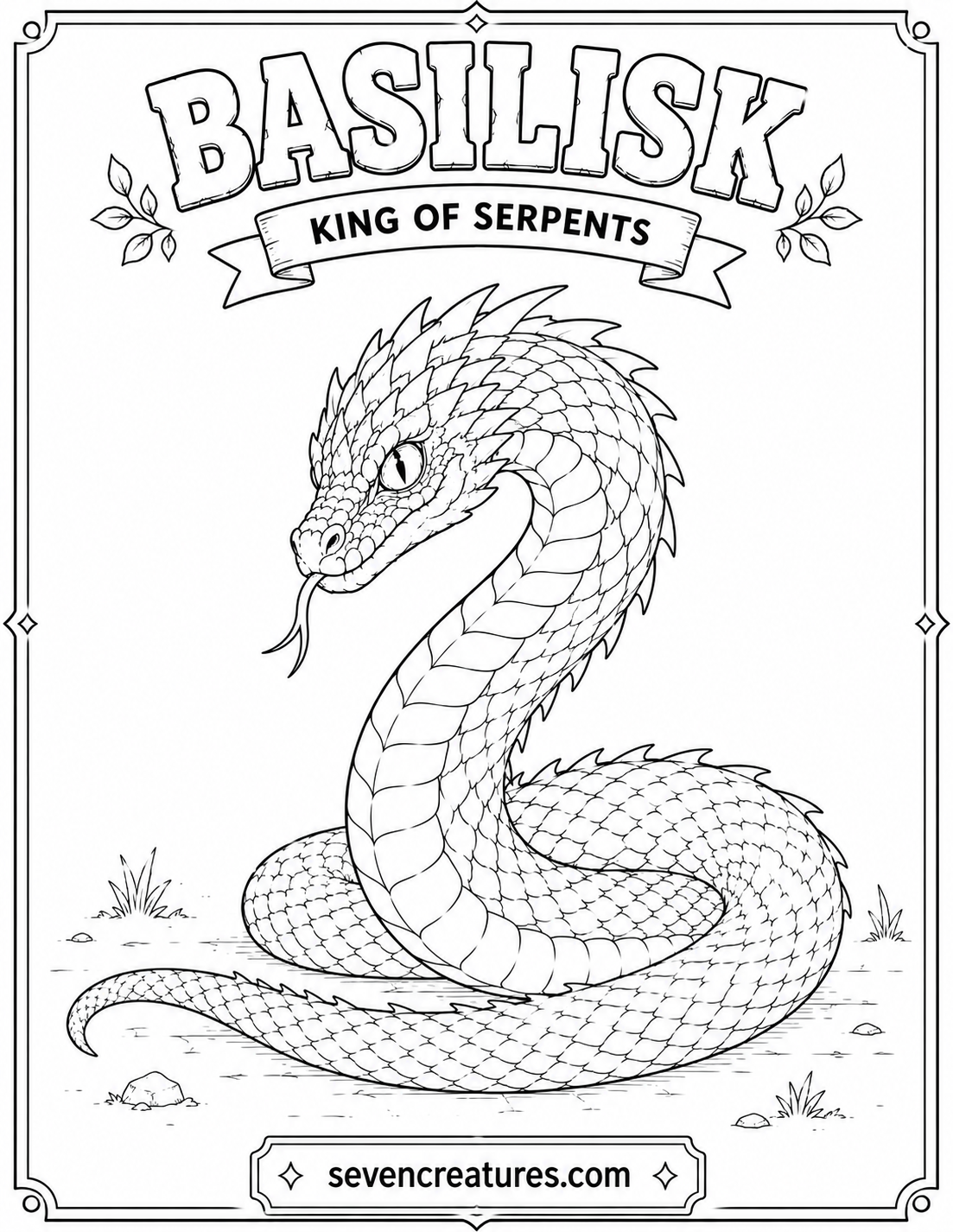
Basilisk King of Serpents printable coloring page

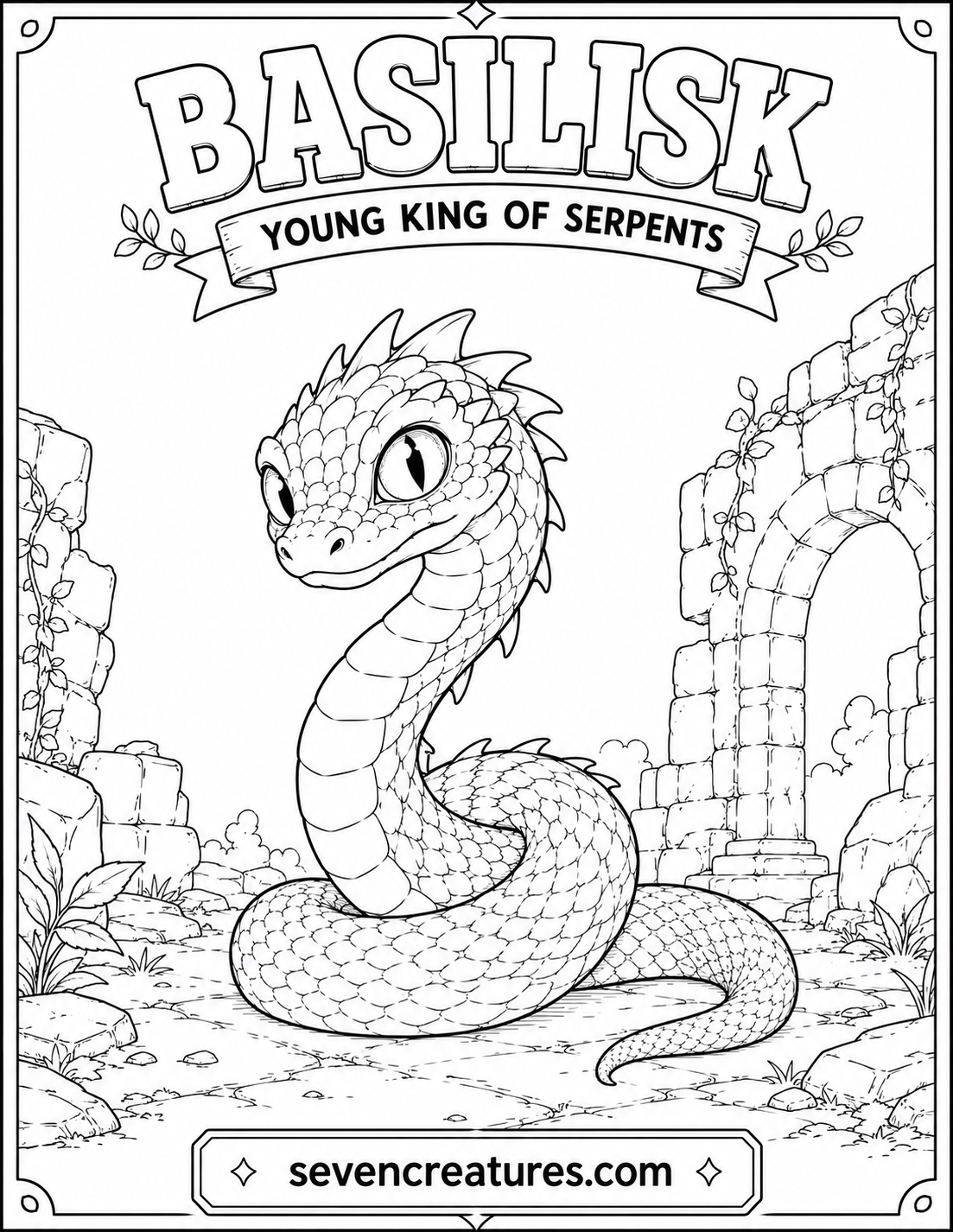
Basilisk: King of Serpents

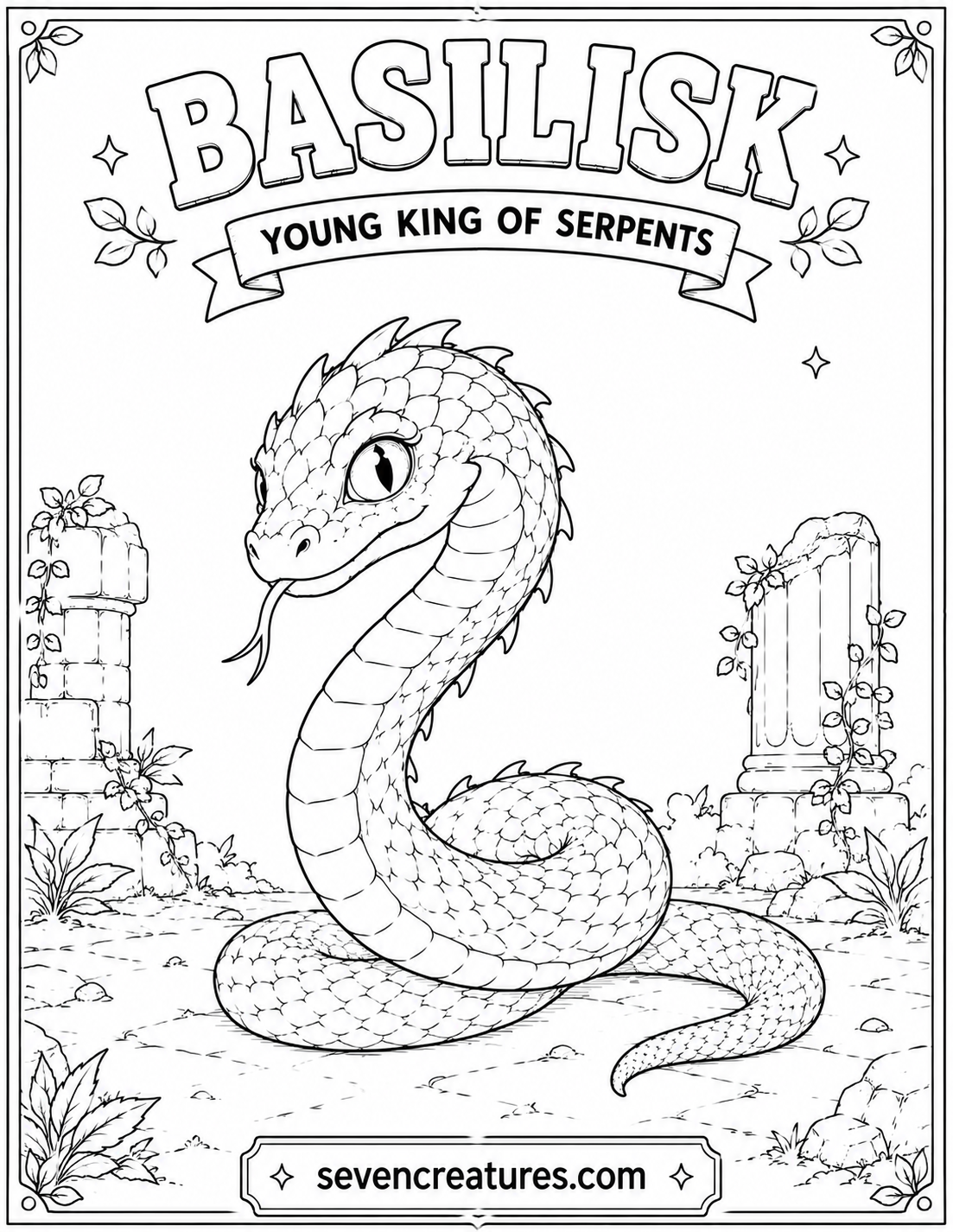
Young Basilisk among ancient ruins coloring page

Young King in the Ruins

Young Basilisk between stone pillars coloring page

Young King by the Pillars

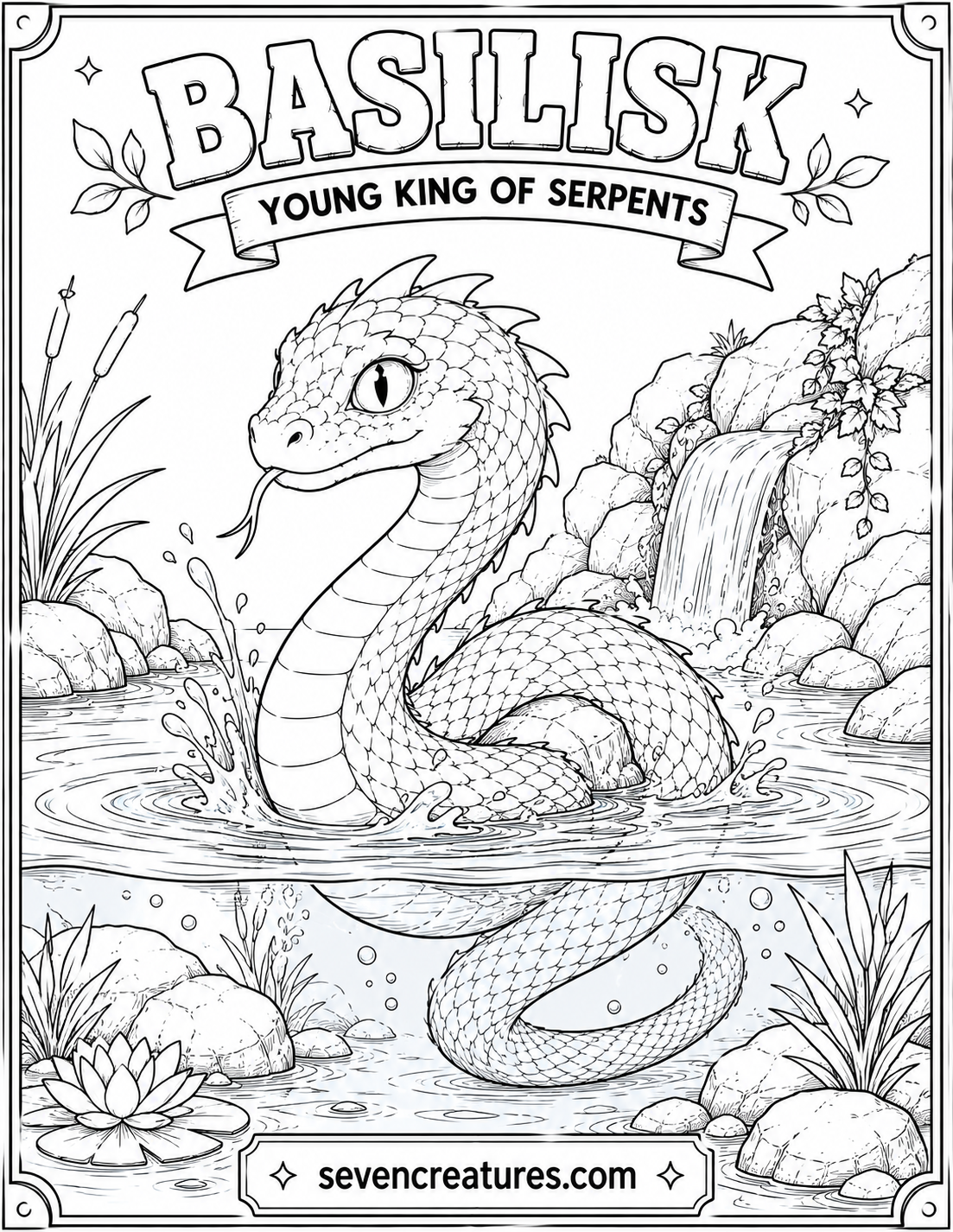
Young Basilisk at a waterfall pond coloring page

Young King at the Pond

FAQ

Frequently Asked Questions

SevenCreatures logo

Reviewed by Sevyn's Creature Team

SevenCreatures creates fun, kid-friendly educational content about animals, dinosaurs, sea creatures, and mythical creatures. Our mission is to help kids explore the amazing creatures of our world through facts, quizzes, coloring pages, and stories.