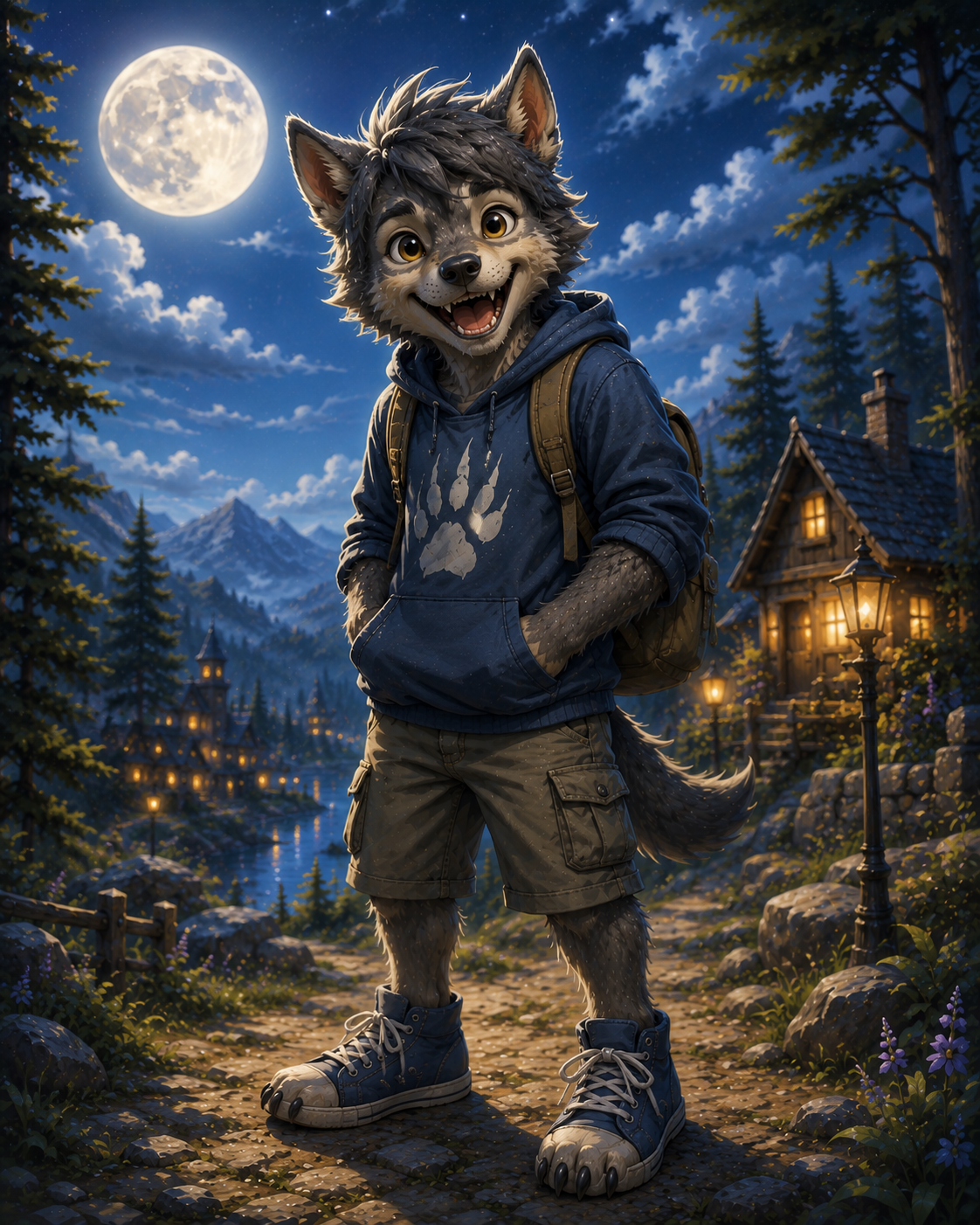
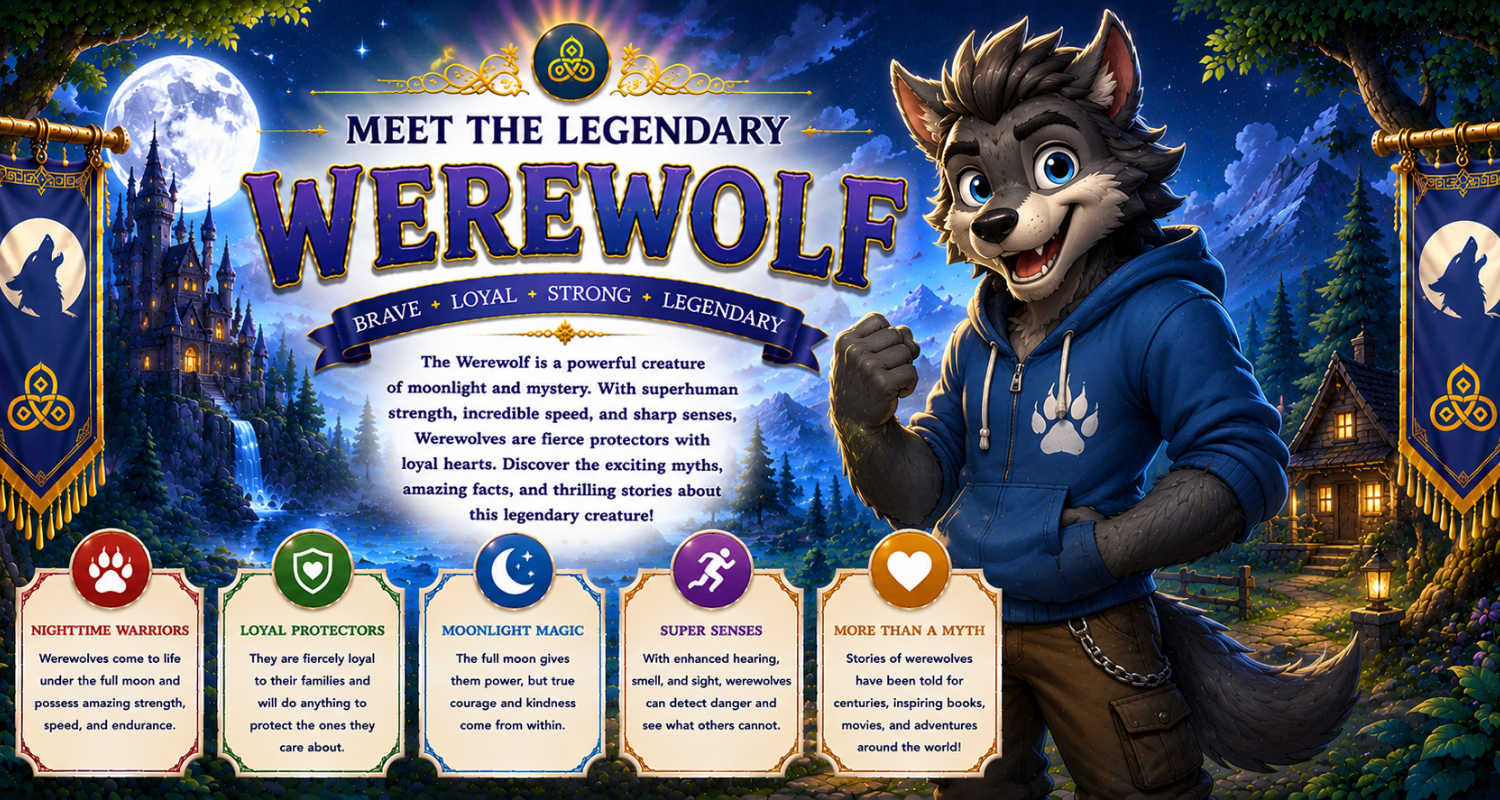
Meet the Legendary Werewolf — strength, fury, instinct, legend hero banner

Werewolf: Facts, Powers, Legends, and Mythology

Guide

What Is a Werewolf?

A werewolf is a legendary creature that transforms between a human and a wolf. According to folklore, this transformation often happens during the full moon, although different cultures tell the story in different ways.

Some legends describe werewolves as victims of magical curses, while others portray them as people who willingly transform using spells or enchanted objects. Either way, the werewolf represents the timeless struggle between human reason and wild animal instinct.

Werewolves stand alongside the dragon, the Minotaur, and the griffin as some of the most famous mythical creatures of all time. Explore the full mythical creatures guide to meet more legendary beasts.
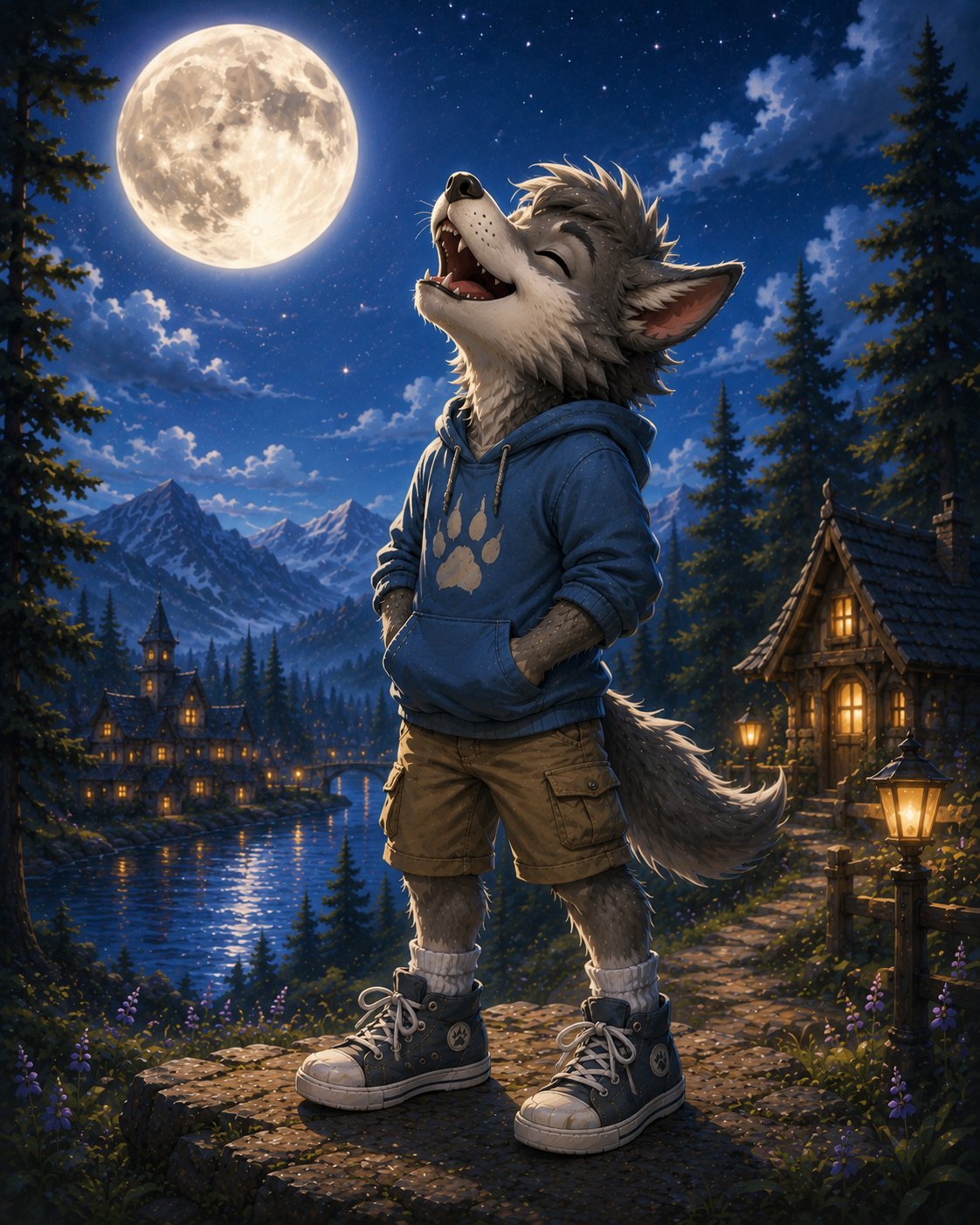
Quick Werewolf Facts

Creature Type

Mythical Shape-Shifter

Appearance

Human That Transforms into a Wolf

Origin

Ancient European Folklore

Habitat

Forests, Mountains, Villages

Powers

Super Strength, Speed, Regeneration

Symbolism

Instinct, Transformation, Fear

Appearance

What Does a Werewolf Look Like?

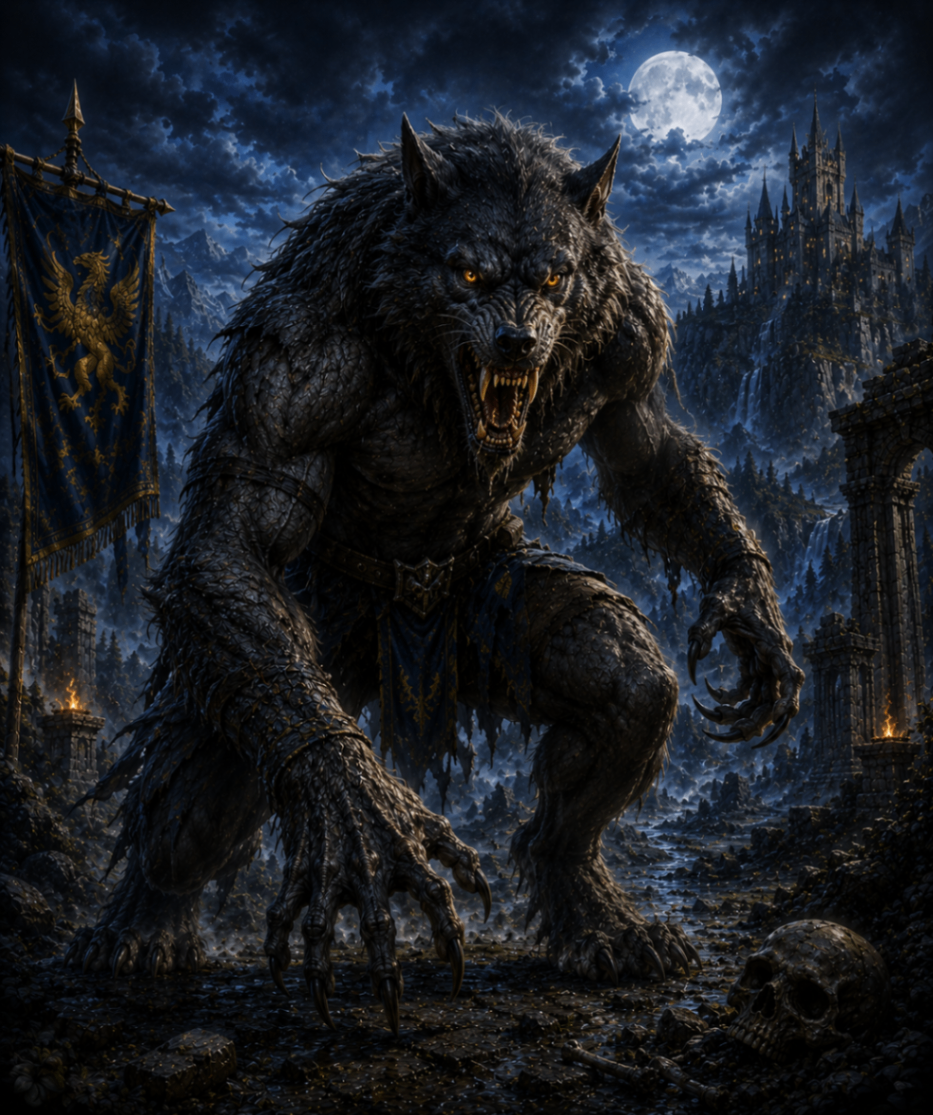
Werewolves combine the features of both humans and wolves — large, muscular creatures covered in thick fur with sharp claws and powerful teeth.

Classic werewolf with thick fur, sharp claws, and glowing eyes beneath the full moon
The classic werewolf — bound by the moon, driven by instinct.

Wolf Head

A long snout, pointed ears, and a powerful jaw give the werewolf its intimidating appearance and tremendous biting force.

Sharp Claws

Long, razor-sharp claws let werewolves climb, defend themselves, and hunt effectively in forests and mountains.

Fangs

Rows of sharp canine teeth fill a werewolf's mouth — one of its most dangerous weapons in folklore and modern fantasy.

Thick Fur

During transformation, thick fur covers most of the werewolf's body, protecting it from harsh weather and giving it a giant-wolf look.

Powerful Muscles

Broad shoulders, muscular arms, and powerful legs let werewolves sprint, leap, and overpower much larger opponents.

Glowing Eyes

Many legends describe glowing yellow eyes that pierce the dark — a sign the beast is hunting beneath the full moon.

Gray Werewolves

The most common color, closely resembling real gray wolves and frequently used in folklore and films.

Black Werewolves

Black werewolves symbolize mystery, darkness, and supernatural power — popular in fantasy novels and video games.

Brown Werewolves

Brown werewolves resemble forest wolves and blend naturally into woodland scenes in traditional folklore illustrations.

White Werewolves

Rare and magical, white werewolves often symbolize ancient bloodlines or powerful supernatural abilities.

How Big Is a Werewolf?

Most legends describe werewolves as much larger than ordinary humans or wolves. Modern fantasy often portrays them standing between 7 and 9 feet (2.1–2.7 meters) tall when fully transformed — broad-shouldered, long-clawed, and faster than any human runner.

Powers

Werewolf Powers

Werewolves combine human intelligence with wolf instincts — making them some of mythology's most powerful shape-shifters.

Super Strength

Werewolves can lift enormous objects, overpower multiple enemies, and defeat powerful creatures in hand-to-hand combat.

Incredible Speed

Their powerful legs let them chase prey across forests, mountains, and open fields with remarkable speed.

Heightened Senses

Exceptional hearing, smell, and eyesight help werewolves detect danger and track prey through even the darkest forests.

Rapid Regeneration

Many modern werewolf stories give them the ability to heal cuts, broken bones, and serious injuries far faster than humans.

Powerful Bite

A werewolf's bite is one of its most dangerous weapons — in modern fiction, a bite is sometimes said to pass on the curse.

Night Vision

Werewolves see clearly in darkness, making them expert nighttime hunters tied closely to the full moon.

Enhanced Agility

Remarkable balance and jumping ability let werewolves leap obstacles and move through wild terrain at incredible speed.

Folklore

Werewolf Mythology Around the World

Werewolf legends have existed for thousands of years across many cultures — each adding its own ideas about how werewolves transform, behave, and can be defeated.

Ancient Greece — Lycaon

King Lycaon angered Zeus and was transformed into a wolf as punishment. This 2,500-year-old tale is one of the oldest werewolf legends ever recorded.

Medieval Europe

During the Middle Ages, werewolf stories spread across the continent. Some people were even put on trial, much like the infamous witch trials.

France — Beast of Gévaudan

In the 1700s, a mysterious creature attacked people in southern France. Many believed it was a werewolf — the mystery still fascinates historians today.

Village Folklore

Small villages told stories of mysterious wolf attacks and strange night-time figures, passing the werewolf legend from generation to generation.

Home & Symbolism

Where Werewolves Live & What They Mean

Habitats

Deep Forests

Dense forests are the most common home for werewolves — thick trees provide excellent cover for hunting and hiding.

Mountain Caves

Remote mountain caves offer hidden shelters that protect werewolves during the day between transformations.

Remote Villages

Many European legends describe werewolves living secretly among villagers — human by day, beast by night.

Wilderness

Forests, hills, snowy mountains, and lonely valleys all reinforce the werewolf's deep connection to the wild.

Symbolism

Transformation

The werewolf is one of mythology's greatest symbols of change — representing hidden emotions and the different sides of a person.

Instinct

Werewolves represent humanity's wild instincts — the powerful natural emotions of survival, courage, and determination.

Fear

For generations, werewolves symbolized fear of the unknown — dark forests, mysterious disappearances, and creatures beneath the full moon.

Dual Nature

Human and wolf live in the same body — a struggle between reason and instinct, kindness and aggression, self-control and temptation.

Survival

Werewolves are exceptional survivors — their strength and adaptability symbolize perseverance through the harshest conditions.

Self-Control

Modern werewolf stories often focus on mastering transformations and protecting others from their immense power.

Legendary

Famous Werewolves Through History

From ancient Greek myth to modern movies, books, and video games — werewolves have inspired countless legendary characters.

Lycaon

The Greek king turned into a wolf by Zeus — considered one of the earliest werewolves in all of mythology.

The Wolf Man (1941)

Universal Pictures' classic film established many modern werewolf traditions, including full-moon transformations and silver.

Remus Lupin

From Harry Potter — kind, intelligent, and compassionate, proving werewolves can be heroic despite a difficult curse.

Teen Wolf

The TV series reimagined werewolves for a younger audience, focusing on friendship, family, and self-control.

The Witcher

Andrzej Sapkowski's series features powerful cursed werewolves inspired directly by European folklore.

Skyrim & Underworld

Players battle (or become) werewolves in Skyrim, while the Underworld films pit Lycans against vampires in modern fantasy.

Printables

Werewolf Coloring Pages

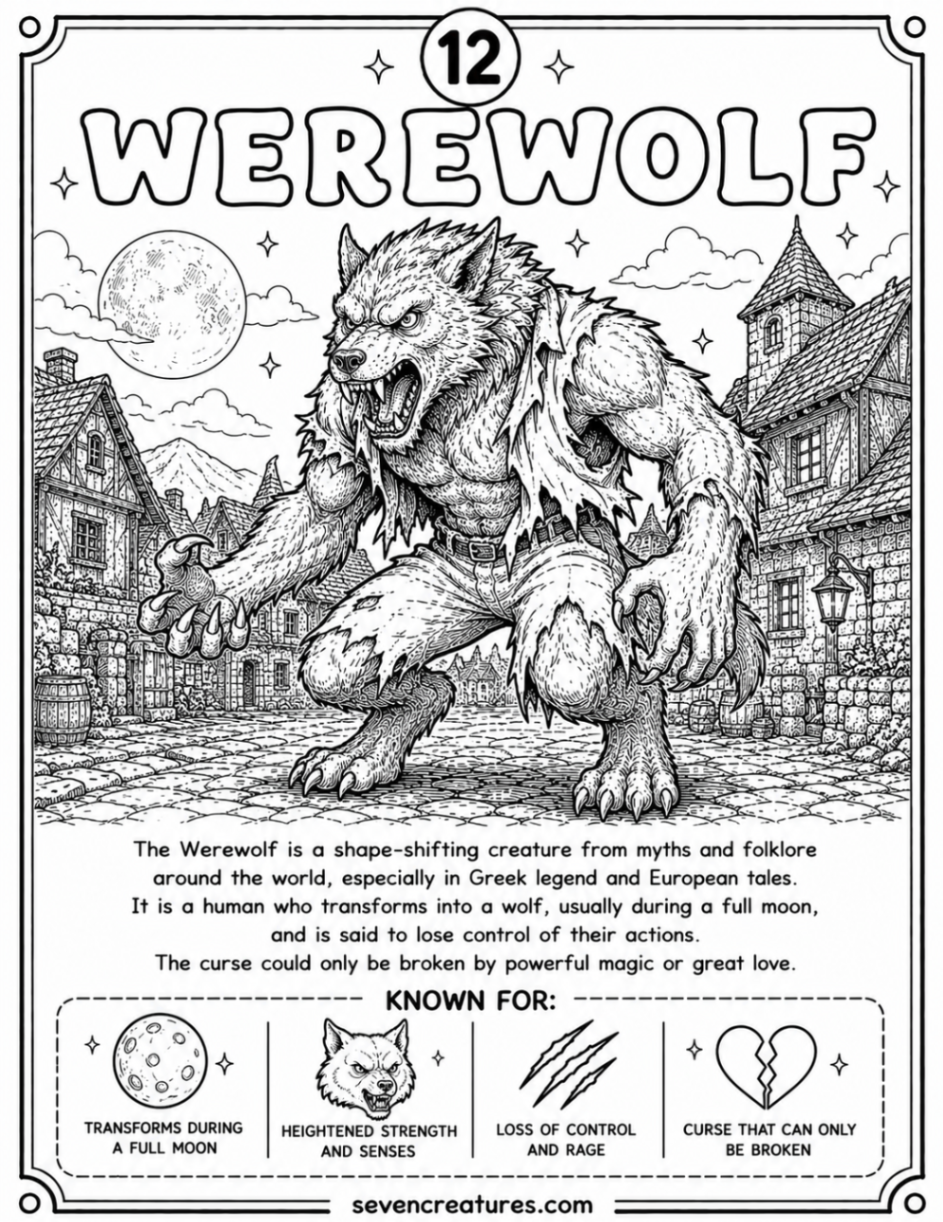
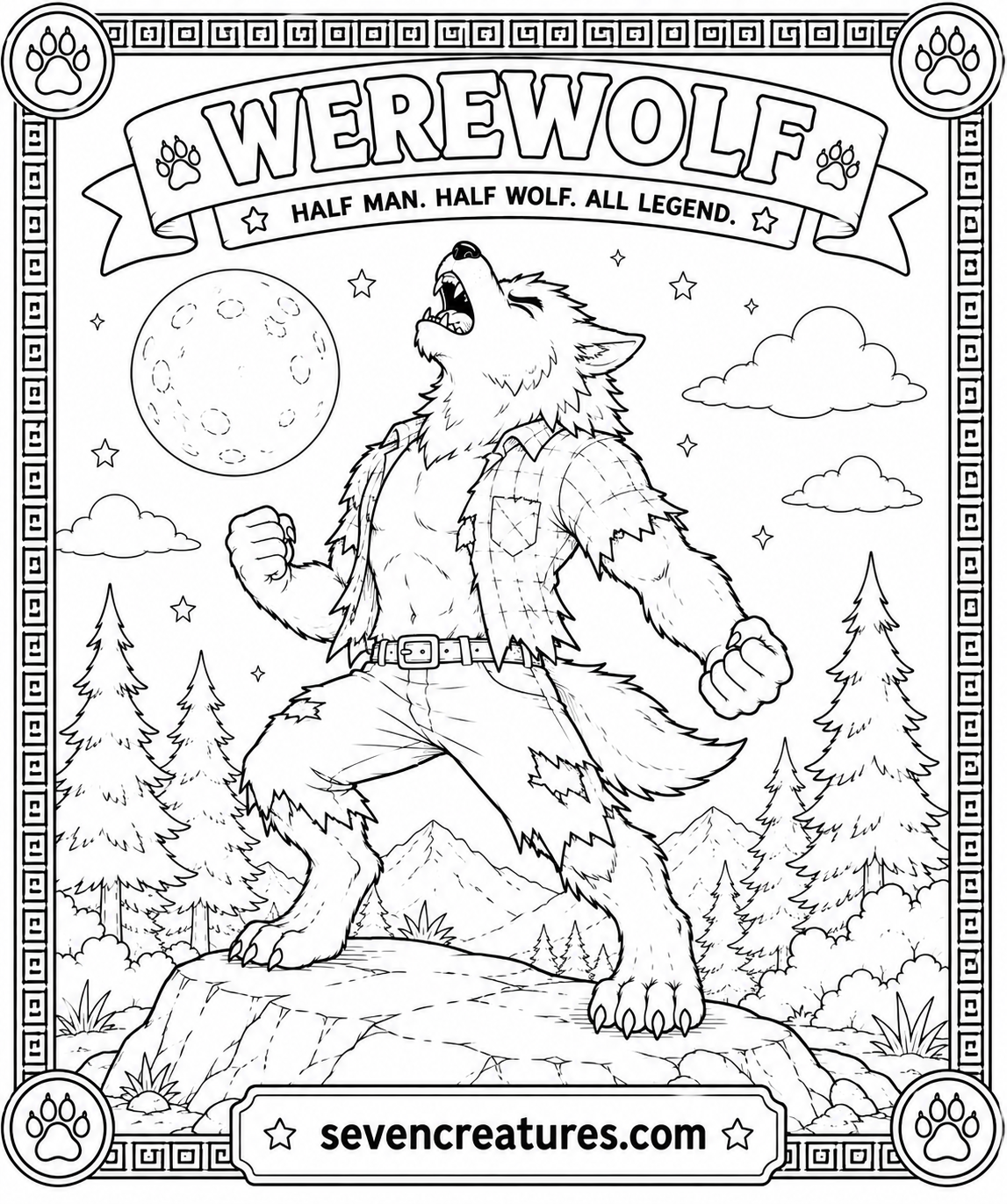
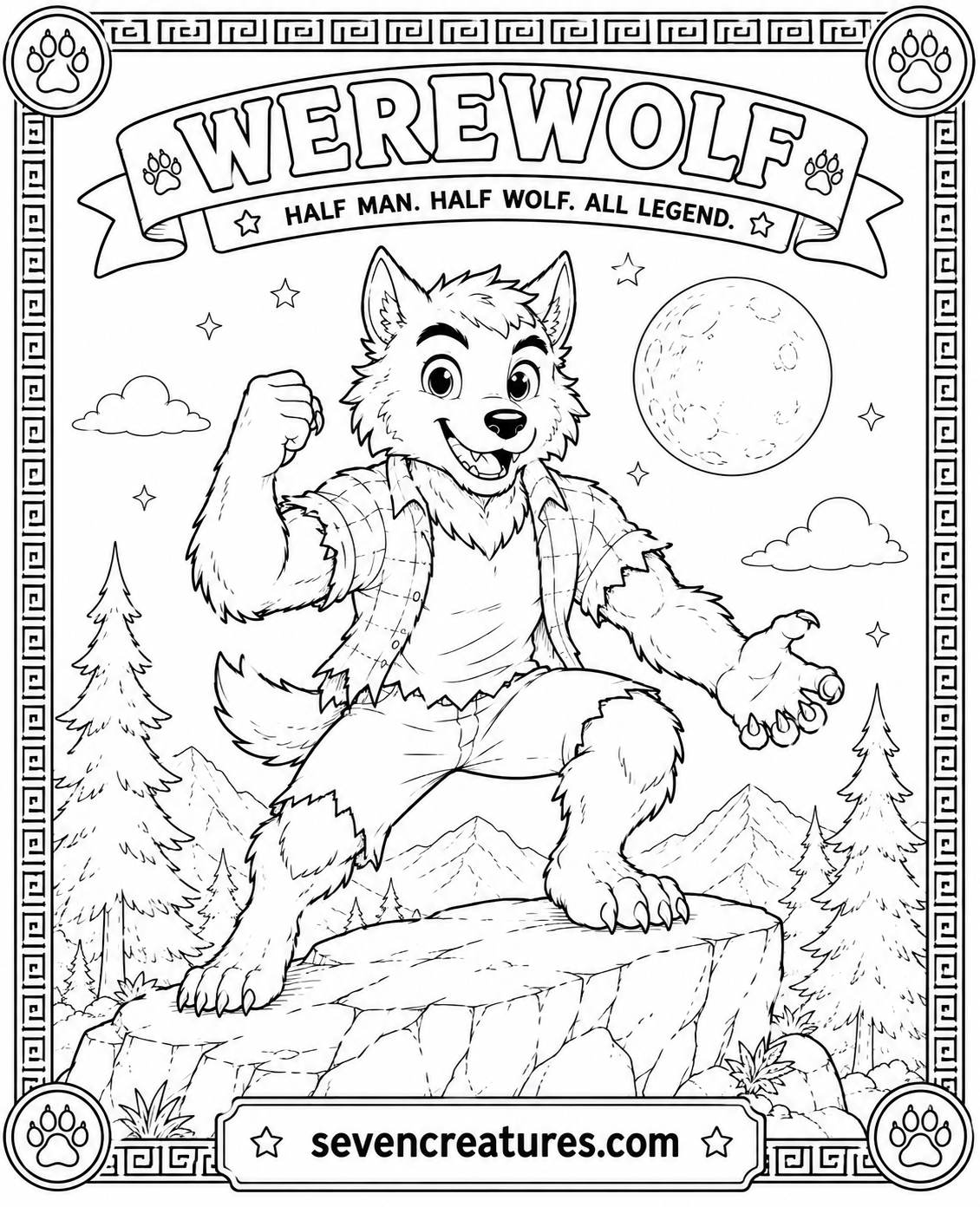
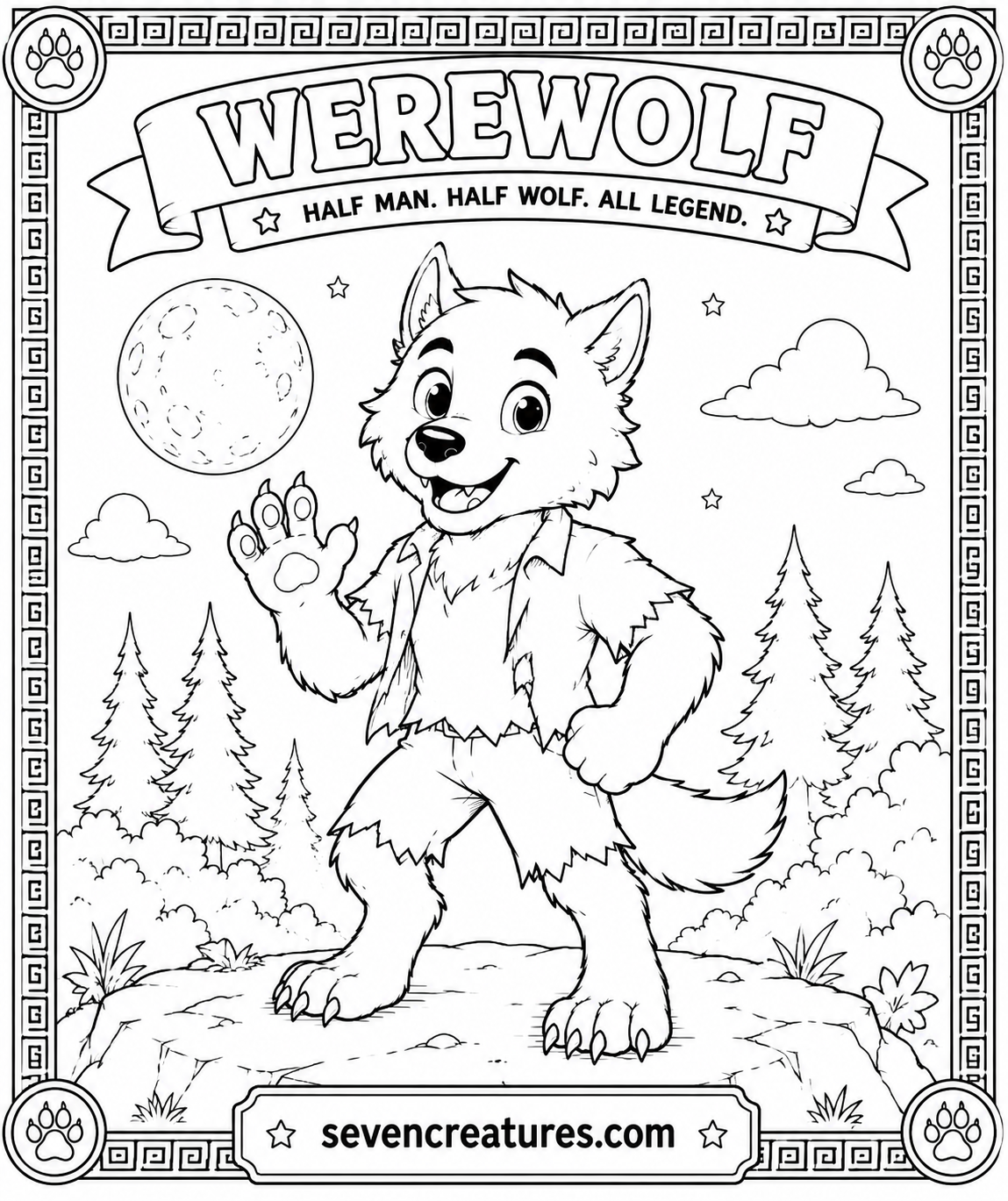
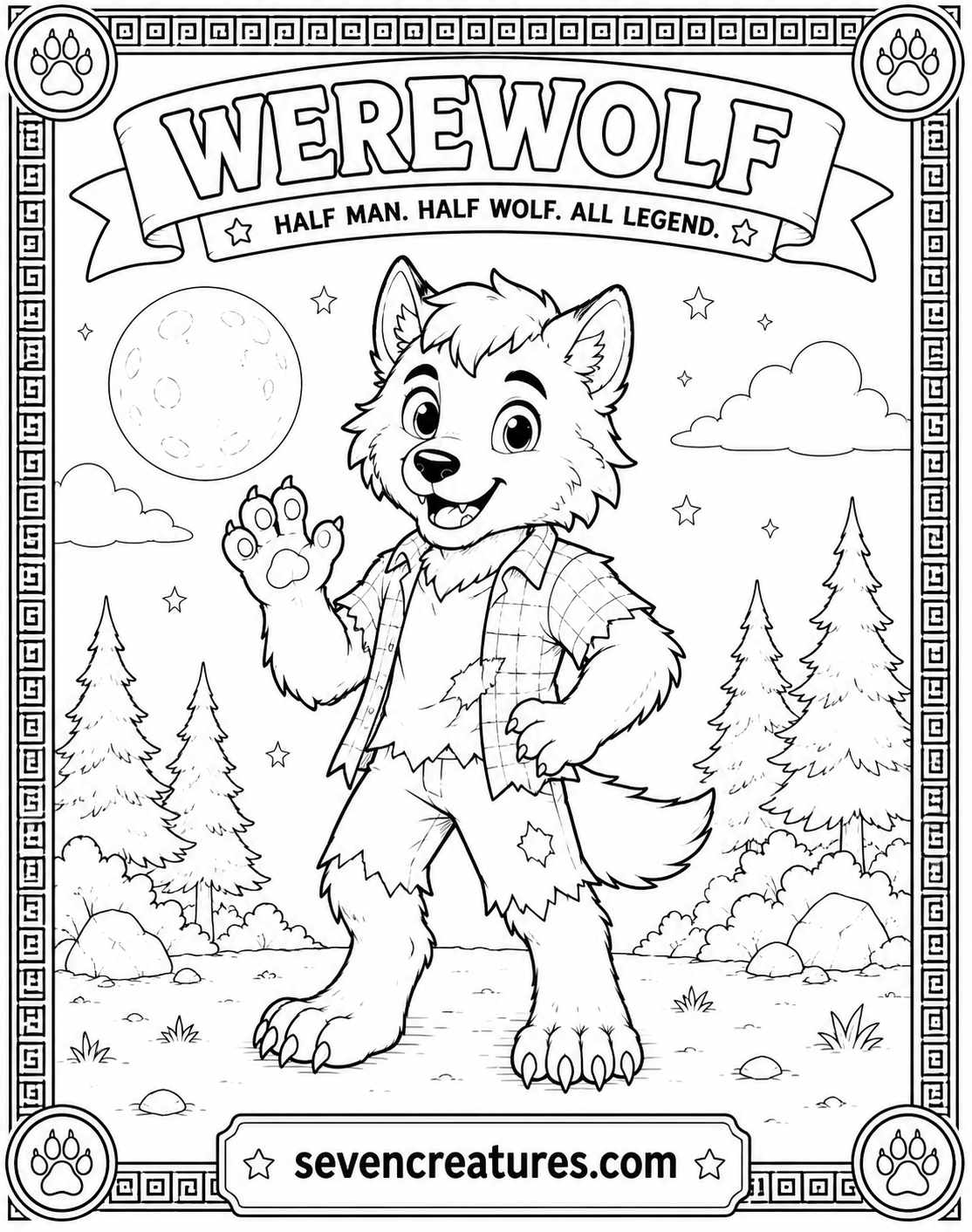
Print a free werewolf coloring page and bring the legendary moonlit beast to life with your own colors.

Printable werewolf coloring page with thick fur, claws, and the full moon

Werewolf of the Full Moon

Free printable coloring page

Open Full Size

For Kids

Fun Werewolf Facts

  • 1Werewolves are people who transform into wolves.
  • 2Many legends say the full moon triggers the transformation.
  • 3The word "werewolf" means "man-wolf."
  • 4Werewolf stories are hundreds of years old.
  • 5Silver is often linked to werewolf legends.
  • 6Werewolves come from European folklore.
  • 7They are famous shape-shifters.
  • 8Many stories describe werewolves with sharp claws.
  • 9Werewolves usually have powerful fangs.
  • 10They are much stronger than ordinary humans.
  • 11Werewolves can run very fast.
  • 12Many legends give them amazing senses.
  • 13Some stories say they heal quickly.
  • 14Wolves inspired many werewolf legends.
  • 15Lycaon is one of the earliest werewolves in mythology.
  • 16The Wolf Man is one of the most famous movie werewolves.
  • 17Remus Lupin is a friendly werewolf from Harry Potter.
  • 18Werewolves appear in many video games.
  • 19They often live in forests and mountains.
  • 20Different cultures tell different werewolf stories.
  • 21Some legends say magic creates werewolves.
  • 22Others describe werewolf curses.
  • 23Modern science says werewolves are fictional.
  • 24Werewolves remain popular in books and movies.
  • 25They are one of the world's most famous mythical creatures.

FAQ

Frequently Asked Questions

SevenCreatures logo

Reviewed by Sevyn's Creature Team

SevenCreatures creates fun, kid-friendly educational content about animals, dinosaurs, sea creatures, and mythical creatures. Our mission is to help kids explore the amazing creatures of our world through facts, quizzes, coloring pages, and stories.